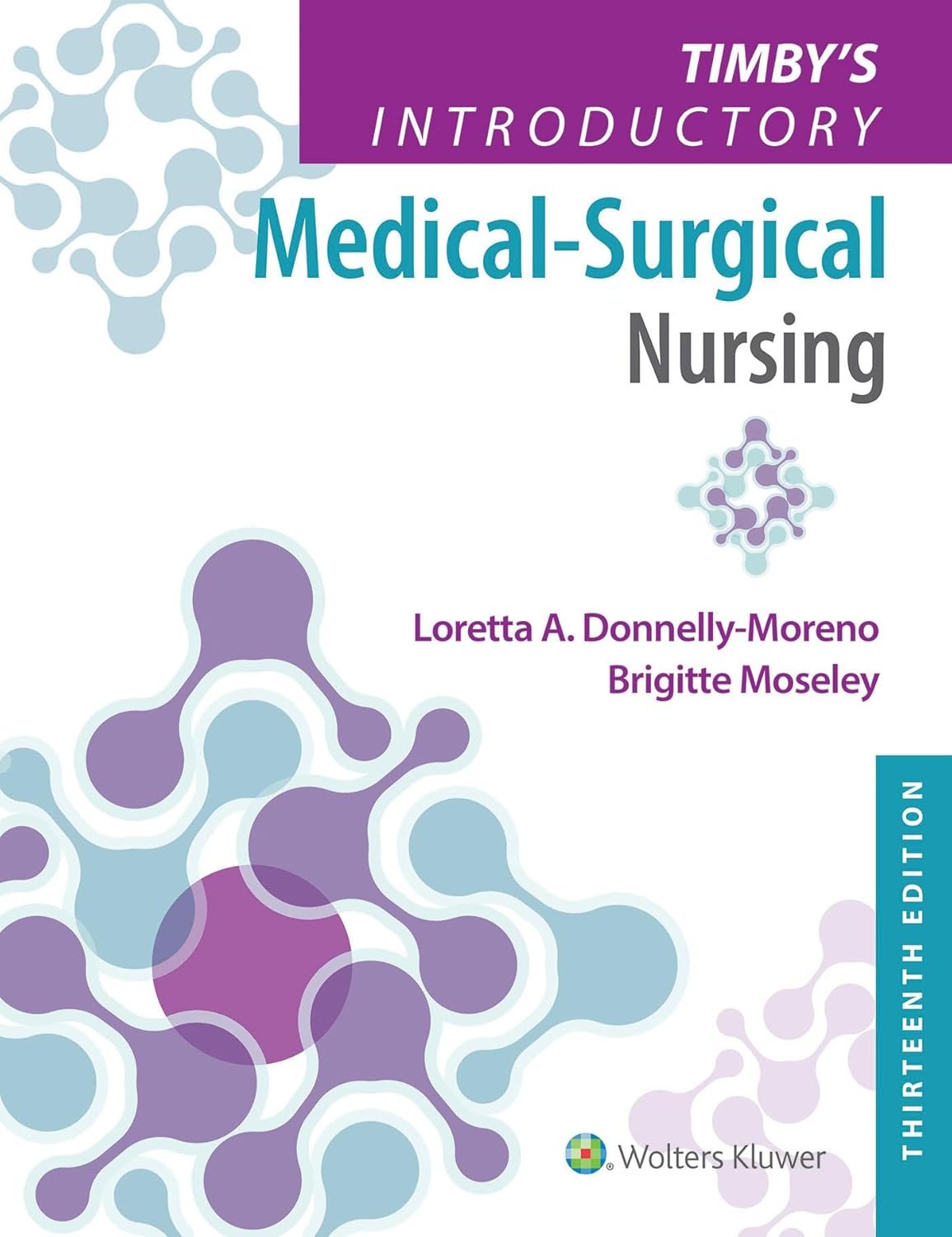
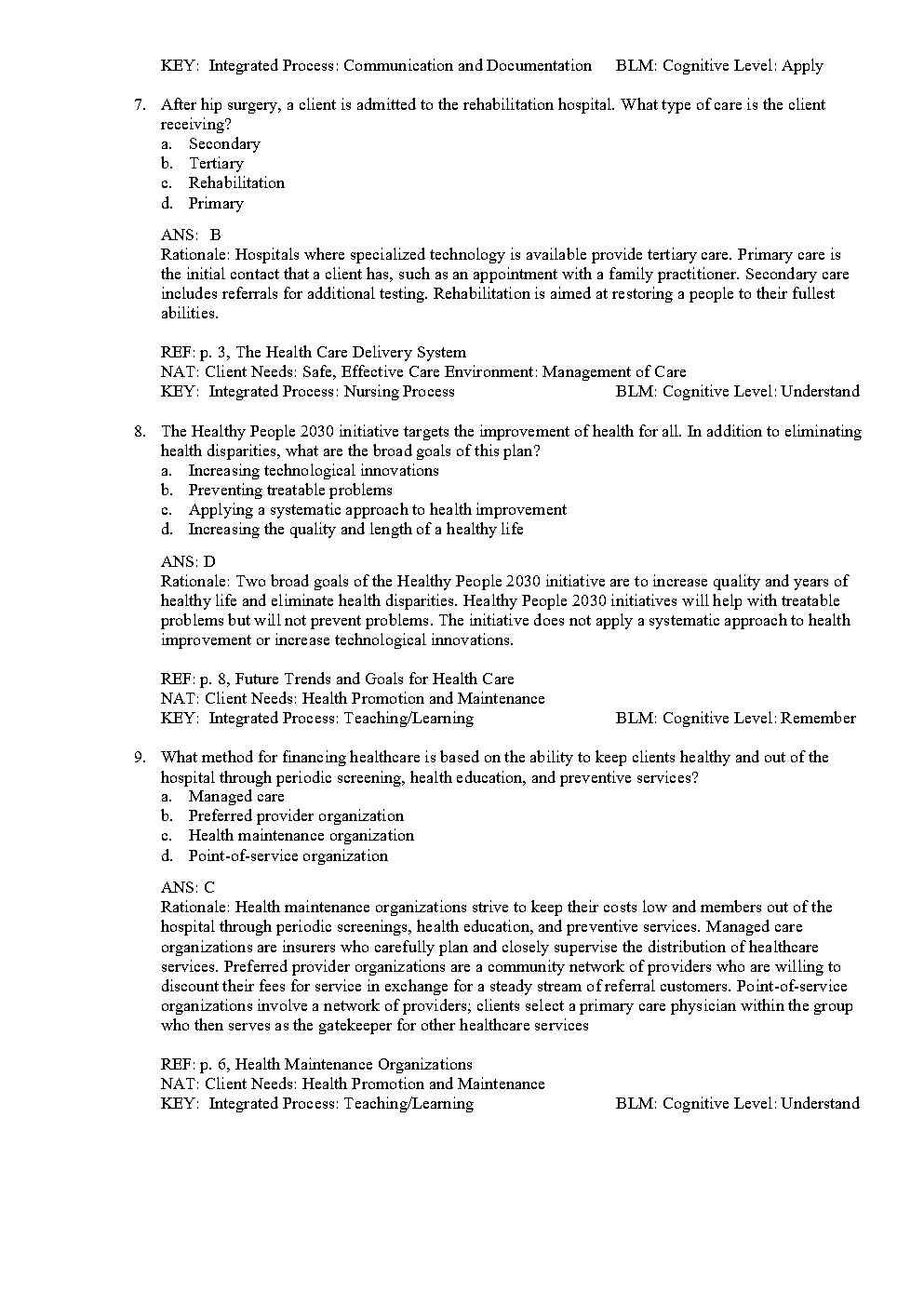
Timby’s Introductory Medical-Surgical Nursing 13th Edition Test Bank
$26.00 Original price was: $26.00.$18.00Current price is: $18.00.
Comprehensive NCLEX-style test bank for Timby’s Introductory Medical-Surgical Nursing 13th Edition, covering all major med-surg systems and foundational nursing skills.

Description
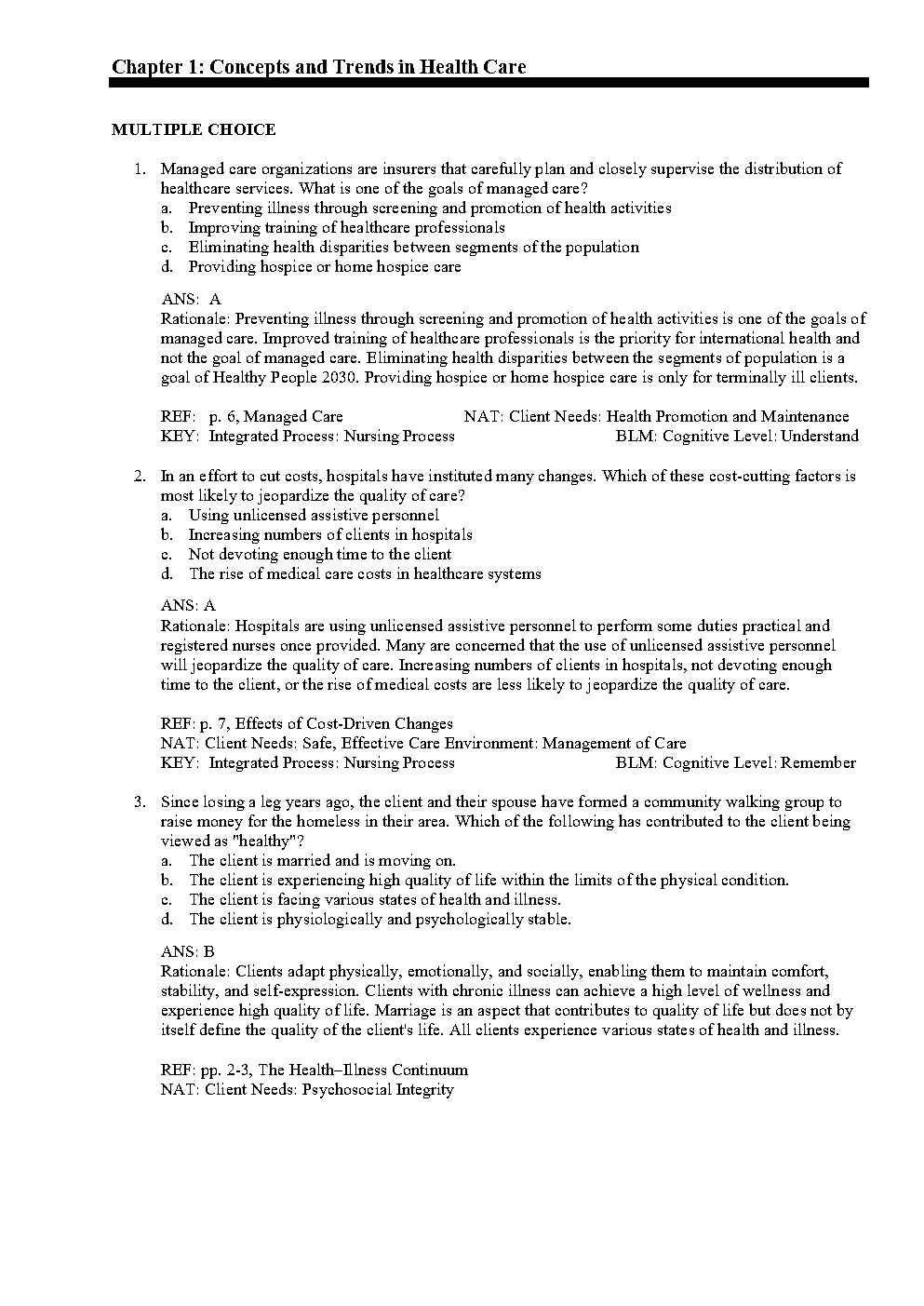
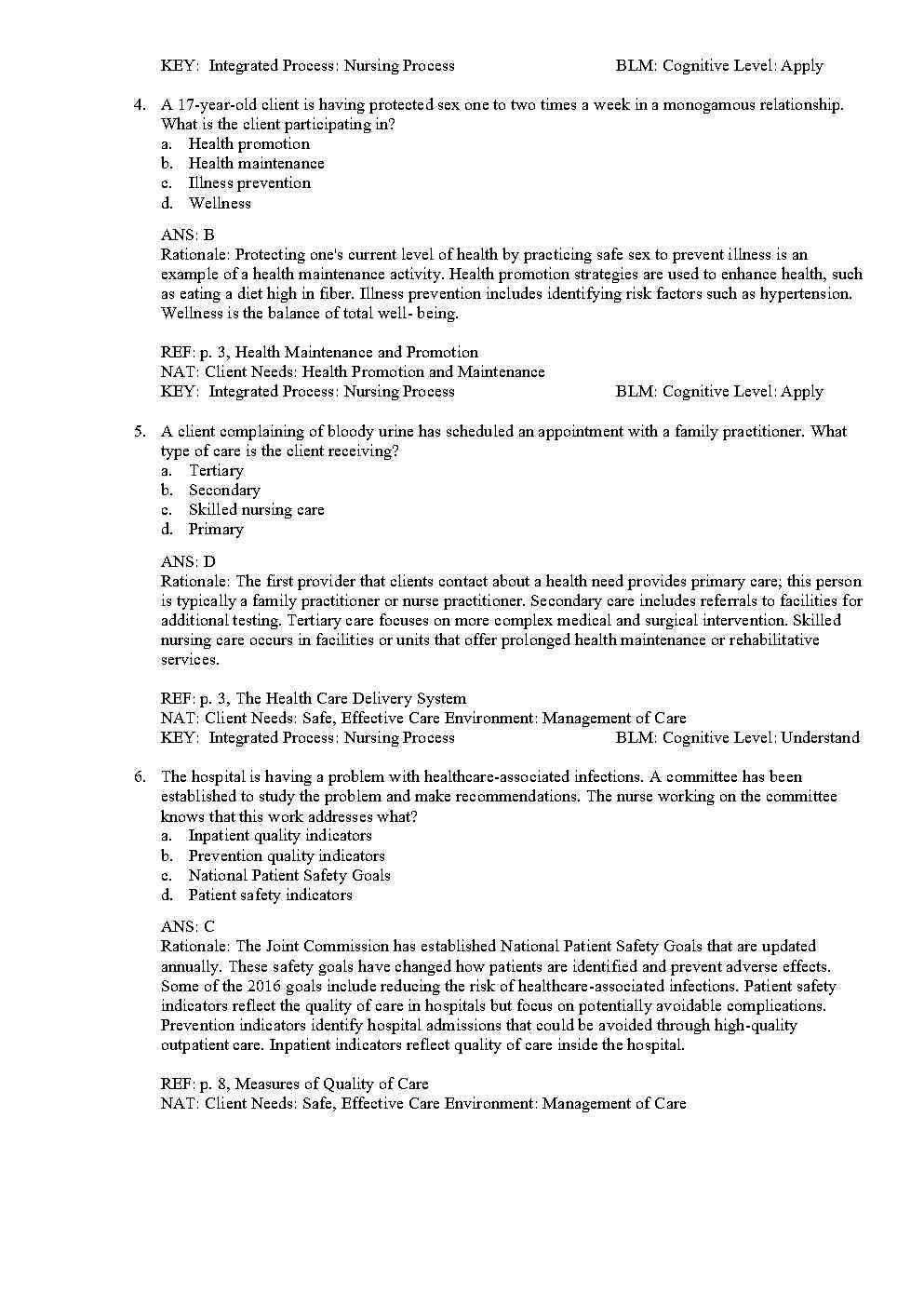
The Timby’s Introductory Medical-Surgical Nursing 13th Edition test bank is an essential study resource designed to help practical and vocational nursing students develop strong clinical judgment, safety awareness, and foundational med-surg skills. This comprehensive test bank follows the full textbook structure and provides realistic NCLEX-style questions that reinforce key concepts across all major body systems, disorders, and nursing responsibilities.
What This Test Bank Includes
This test bank mirrors the 13th edition content and supports learning across introductory nursing practice, legal and ethical principles, leadership, infection control, perioperative care, cardiovascular and respiratory systems, endocrine and renal disorders, neurologic and musculoskeletal conditions, and more. Each question promotes deeper understanding and builds confidence for real clinical scenarios.
- 70+ chapters spanning all medical-surgical nursing content areas
- NCLEX-style questions focused on safety, decision-making, and priority setting
- Coverage from assessment to management for all major body systems
- Includes shock, cancer, endocrine disorders, heart failure, respiratory diseases, trauma, and emergency care
- Special focus on fluid/electrolyte balance, diabetes management, and perioperative care
- Answer key and rationales included for fast and accurate review
- Instant digital download for easy access on any device
Why This Test Bank Helps
This resource is ideal for PN and VN students preparing for course exams, clinical readiness, and licensure tests such as the NCLEX-PN and REx-PN. Practice questions replicate real exam formats, helping learners apply theory to practice while strengthening understanding of pathophysiology, nursing interventions, communication, and patient safety.
Table of Contents – Introductory Medical-Surgical Nursing, 13th Edition
- Chapter 1: Concepts and Trends in Health Care
- Chapter 2: Settings and Models for Nursing Care
- Chapter 3: The Nursing Process
- Chapter 4: Interviewing and Physical Assessment
- Chapter 5: Legal and Ethical Issues
- Chapter 6: Leadership Roles and Management Functions
- Chapter 7: Nurse–Client Relationships
- Chapter 8: Cultural Care Considerations
- Chapter 9: Integrative Medicine and Alternative Therapies
- Chapter 10: End-of-Life Care
- Chapter 11: Pain Management
- Chapter 12: Infection
- Chapter 13: Intravenous Therapy
- Chapter 14: Perioperative Care
- Chapter 15: Disaster Situations
- Chapter 16: Caring for Clients With Fluid, Electrolyte, and Acid–Base Imbalances
- Chapter 17: Caring for Clients in Shock
- Chapter 18: Caring for Clients With Cancer
- Chapter 19: Introduction to the Respiratory System
- Chapter 20: Caring for Clients With Upper Respiratory Disorders
- Chapter 21: Caring for Clients With Lower Respiratory Disorders
- Chapter 22: Introduction to the Cardiovascular System
- Chapter 23: Caring for Clients With Infectious and Inflammatory Disorders of the Heart and Blood Vessels
- Chapter 24: Caring for Clients With Valvular Disorders of the Heart
- Chapter 25: Caring for Clients With Disorders of Coronary and Peripheral Blood Vessels
- Chapter 26: Caring for Clients With Cardiac Arrhythmias
- Chapter 27: Caring for Clients With Hypertension
- Chapter 28: Caring for Clients With Heart Failure
- Chapter 29: Caring for Clients Undergoing Cardiovascular Surgery
- Chapter 30: Introduction to the Hematopoietic and Lymphatic Systems
- Chapter 31: Caring for Clients With Disorders of the Hematopoietic System
- Chapter 32: Caring for Clients With Disorders of the Lymphatic System
- Chapter 33: Introduction to the Immune System
- Chapter 34: Caring for Clients With Immune-Mediated Disorders
- Chapter 35: Caring for Clients With HIV/AIDS
- Chapter 36: Introduction to the Nervous System
- Chapter 37: Caring for Clients With Central and Peripheral Nervous System Disorders
- Chapter 38: Caring for Clients With Cerebrovascular Disorders
- Chapter 39: Caring for Clients With Head and Spinal Cord Trauma
- Chapter 40: Caring for Clients With Neurologic Deficits
- Chapter 41: Introduction to the Sensory System
- Chapter 42: Caring for Clients With Eye Disorders
- Chapter 43: Caring for Clients With Ear Disorders
- Chapter 44: Introduction to the Gastrointestinal System and Accessory Structures
- Chapter 45: Caring for Clients With Disorders of the Upper Gastrointestinal Tract
- Chapter 46: Caring for Clients With Disorders of the Lower Gastrointestinal Tract
- Chapter 47: Caring for Clients With Disorders of the Liver, Gallbladder, or Pancreas
- Chapter 48: Caring for Clients With Ostomies
- Chapter 49: Introduction to the Endocrine System
- Chapter 50: Caring for Clients With Disorders of the Endocrine System
- Chapter 51: Caring for Clients With Diabetes Mellitus
- Chapter 52: Introduction to the Female and Male Reproductive Systems
- Chapter 53: Caring for Clients With Disorders of the Female Reproductive System
- Chapter 54: Caring for Clients With Breast Disorders
- Chapter 55: Caring for Clients With Disorders of the Male Reproductive System
- Chapter 56: Caring for Clients With Sexually Transmitted Infections
- Chapter 57: Introduction to the Urinary System
- Chapter 58: Caring for Clients With Disorders of the Kidneys and Ureters
- Chapter 59: Caring for Clients With Disorders of the Bladder and Urethra
- Chapter 60: Introduction to the Musculoskeletal System
- Chapter 61: Caring for Clients Requiring Orthopedic Treatment
- Chapter 62: Caring for Clients With Traumatic Musculoskeletal Injuries
- Chapter 63: Caring for Clients With Orthopedic and Connective Tissue Disorders
- Chapter 64: Introduction to the Integumentary System
- Chapter 65: Caring for Clients With Skin, Hair, and Nail Disorders
- Chapter 66: Caring for Clients With Burns
- Chapter 67: Interaction of Body and Mind
- Chapter 68: Caring for Clients With Anxiety Disorders
- Chapter 69: Caring for Clients With Mood Disorders
- Chapter 70: Caring for Clients With Eating Disorders
- Chapter 71: Caring for Clients With Substance Use Disorders
- Chapter 72: Caring for Clients With Dementia and Thought Disorders
Sample Question Themes
Examples of the content included:
- Question 1. The nurse is providing information about foot care to a client with diabetes. Which instruction would the nurse include?
- a. “Wash your feet in hot water every day.”
- b. “Use a razor to remove corns or calluses.”
- c. “Be sure to apply a moisturizer to feet daily.”
- d. “Wear well-fitting comfortable rubber shoes.”
Correct Answer: c. “Be sure to apply a moisturizer to feet daily.”
Rationale: Moisturizing helps prevent skin cracking and infection. Clients should use warm—not hot—water when bathing the feet, avoid razors to remove calluses, and choose well-fitting shoes made of breathable materials (not rubber or plastic).
- Question 2. The nurse is taking the history of a client with diabetes who is experiencing autonomic neuropathy. Which would the nurse expect the client to report?
- a. Skeletal deformities
- b. Paresthesias
- c. Erectile dysfunction
- d. Soft tissue ulceration
Correct Answer: c. Erectile dysfunction
Rationale: Autonomic neuropathy affects organ function, commonly leading to erectile dysfunction in men with diabetes. Paresthesias relate to sensory neuropathy, whereas skeletal deformities and ulcers indicate motor neuropathy complications.
- Question 3. A client with type 2 diabetes is informed of being unable to have a pancreatic transplant and asks the nurse why. Which reason should the nurse provide?
- a. Increased risk for urologic complications
- b. Need for exocrine enzymatic drainage
- c. Underlying problem of insulin resistance
- d. Need for lifelong immunosuppressive therapy
Correct Answer: c. Underlying problem of insulin resistance
Rationale: Type 2 diabetes is characterized by insulin resistance, which a pancreas transplant cannot correct. Transplant procedures require lifelong immunosuppressive therapy, but this is not a contraindication specific to type 2 diabetes.
FAQ
Q1: Is this test bank suitable for NCLEX-PN exam preparation?
Yes. The questions emphasize clinical reasoning, safety protocols, and med-surg fundamentals aligned with PN-level practice.
Q2: How is the test bank delivered?
It is provided as an instant digital download so you can begin studying immediately after purchase.
Related Test Banks
- Linton Medical-Surgical Nursing 8th Edition Test Bank
- Brunner & Suddarth’s Medical-Surgical Nursing 15th Edition Test Bank
- Lewis Medical-Surgical Nursing 12th Edition Test Bank
- Davis Advantage Understanding Med-Surg Nursing 7th Edition Test Bank
- Timby Introductory Medical-Surgical Nursing 13th Edition Test Bank
- Medical-Surgical Nursing: Concepts & Practice 5th Edition Test Bank
Start Strengthening Your Med-Surg Foundations
Build confidence, improve exam readiness, and master medical-surgical nursing concepts with this complete test bank. Download now and begin preparing effectively.
Related products
-
Sale!
Test Bank for Brunner & Suddarth’s Canadian Textbook of Medical-Surgical Nursing, 4th Edition by Mohamed El Hussein & Joseph Osuji
0 - 0 reviews$26.00Original price was: $26.00.$23.00Current price is: $23.00. Add to cart -
Sale!

Test Bank for Lehninger Principles of Biochemistry, 8th Edition
0 - 0 reviews$26.00Original price was: $26.00.$23.00Current price is: $23.00. Add to cart -
Sale!
Understanding Nursing Research 8th Edition Test Bank (Grove & Gray)
0 - 0 reviews$26.00Original price was: $26.00.$23.00Current price is: $23.00. Add to cart -
Sale!
Test Bank for Medical-Surgical Nursing: Concepts and Practice, 8th Edition
0 - 0 reviews$26.00Original price was: $26.00.$17.00Current price is: $17.00. Add to cart