
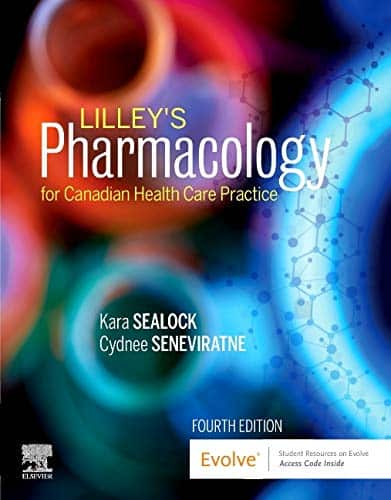
Test bank Lilley’s Pharmacology for Canadian Health Care Practice 4th Edition
$23.00 Original price was: $23.00.$20.00Current price is: $20.00.
Instant PDF download of the Test Bank for Lilley’s Pharmacology for Canadian Health Care Practice (4th Edition) by Sealock, Seneviratne, Lilley & Snyder. Includes NCLEX-style pharmacology questions with answers & rationales—ideal for Canadian nursing students, NCLEX, ATI & HESI prep.

Description
Why Choose This Test Bank?
- Edition-specific: Written for the Canadian 4th Edition by Sealock, Seneviratne, Lilley, & Snyder
- NCLEX/ATI/HESI-style: Practice questions with rationales that mirror exam format
- Safe medication practice: Includes drug classifications, administration, errors, patient teaching
- Instant Access: Downloadable PDF, accessible on any device
Table of Contents Coverage
- Nursing Practice in Canada and Drug Therapy
- Pharmacological Principles
- Legal and Ethical Considerations
- Patient-Focused Considerations
- Gene Therapy and Pharmacogenomics
- Medication Errors
- Patient Education and Drug Therapy
- Over-the-Counter Drugs and Natural Health Products
- Vitamins and Minerals
- Principles of Drug Administration
- Analgesic Drugs
- General and Local Anaesthetics
- CNS Depressants and Muscle Relaxants
- CNS Stimulants
- Antiepileptic Drugs
- Antiparkinsonian Drugs
- Psychotherapeutic Drugs
- Substance Misuse
- Adrenergic Drugs
- Adrenergic-Blocking Drugs
- Cholinergic Drugs
- Cholinergic-Blocking Drugs
- Antihypertensive Drugs
- Antianginal Drugs
- Heart Failure Drugs
- Antidysrhythmic Drugs
- Coagulation Modifier Drugs
- Antilipemic Drugs
- Diuretic Drugs
- Fluids and Electrolytes
- Pituitary, Thyroid, and Antithyroid Drugs
- Antidiabetic Drugs
- Adrenal Drugs
- Women’s & Men’s Health Drugs
- Antihistamines, Decongestants, Antitussives, Expectorants
- Respiratory Drugs
- GI Drugs (acid control, antidiarrheals, laxatives, antiemetics)
- Nutritional Supplements
- Antibiotics (Part 1 & 2)
- Antiviral, Antitubercular, Antifungal, Antimalarial, Antiparasitic Drugs
- Anti-inflammatory & Antigout Drugs
- Immunosuppressant & Immunizing Drugs
- Antineoplastic Drugs (Parts 1 & 2)
- Biological Response Modifiers & Antirheumatics
- Anemia Drugs
- Dermatological, Ophthalmic, and Otic Drugs
Sample Questions
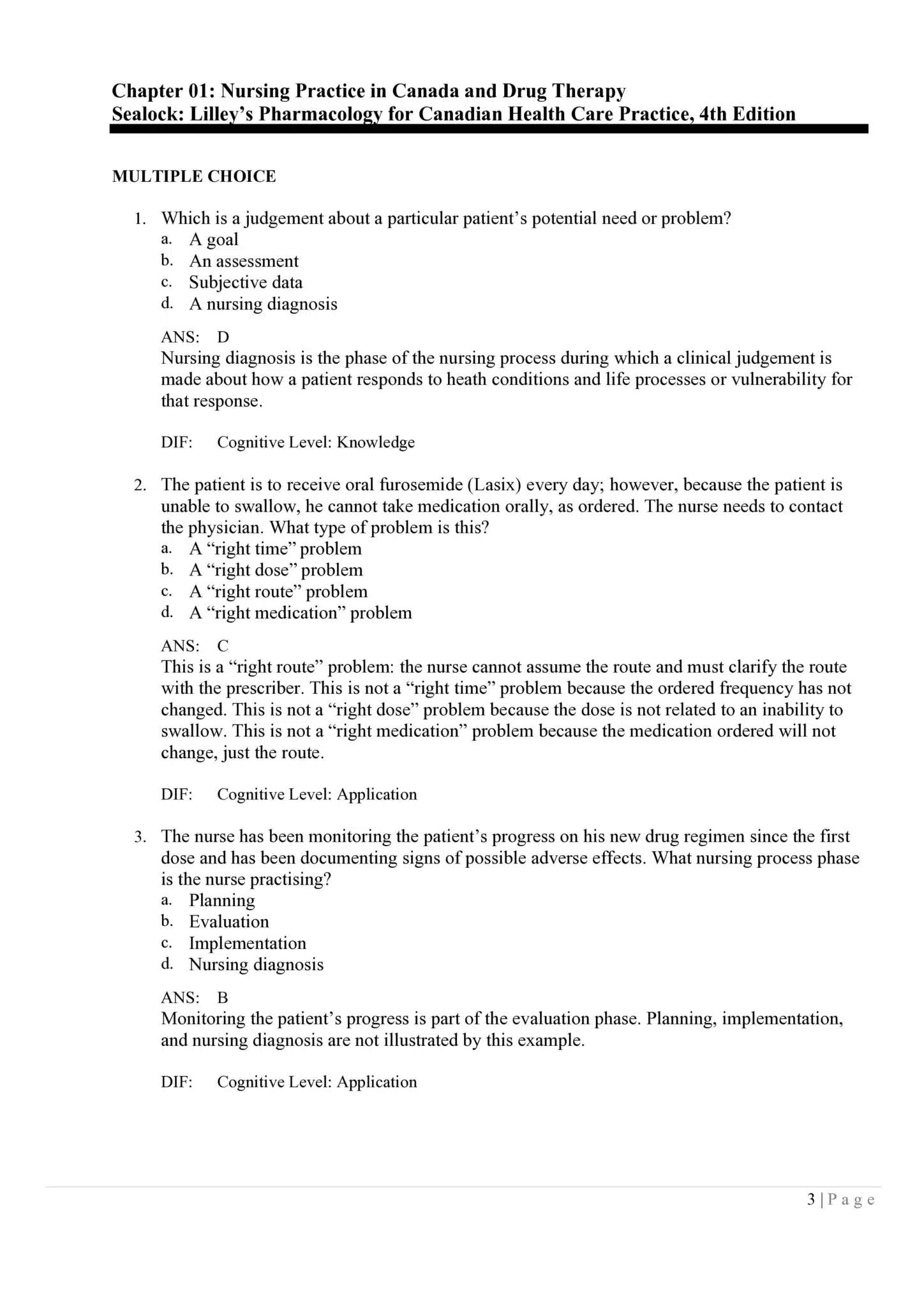
1. Which is a judgement about a particular patient’s potential need or problem?
a. A goal
b. An assessment
c. Subjective data
d. A nursing diagnosis
ANS: D
Nursing diagnosis is the phase of the nursing process during which a clinical judgement is made about how a patient responds to heath conditions and life processes or vulnerability for that response.
DIF: Cognitive Level: Knowledge
2. The patient is to receive oral furosemide (Lasix) every day; however, because the patient is unable to swallow, he cannot take medication orally, as ordered. The nurse needs to contact the physician. What type of problem is this?
a. A “right time” problem
b. A “right dose” problem
c. A “right route” problem
d. A “right medication” problem
ANS: C
This is a “right route” problem: the nurse cannot assume the route and must clarify the route with the prescriber. This is not a “right time” problem because the ordered frequency has not changed. This is not a “right dose” problem because the dose is not related to an inability to swallow. This is not a “right medication” problem because the medication ordered will not change, just the route.
DIF: Cognitive Level: Application
3. The nurse has been monitoring the patient’s progress on his new drug regimen since the first dose and has been documenting signs of possible adverse effects. What nursing process phase is the nurse practising?
a. Planning
b. Evaluation
c. Implementation
d. Nursing diagnosis
ANS: B
Monitoring the patient’s progress is part of the evaluation phase. Planning, implementation, and nursing diagnosis are not illustrated by this example.
DIF: Cognitive Level: Application
FAQs — Lilley’s Pharmacology for Canadian Health Care Practice (4th Edition)
Is this test bank aligned with the Canadian 4th Edition by Sealock, Seneviratne, Lilley & Snyder?
Yes. All questions are organized chapter-by-chapter to match the 4th Edition of Lilley’s Pharmacology for Canadian Health Care Practice, ensuring full alignment with Canadian nursing curricula and pharmacology content.
Do the pharmacology questions include answers and rationales?
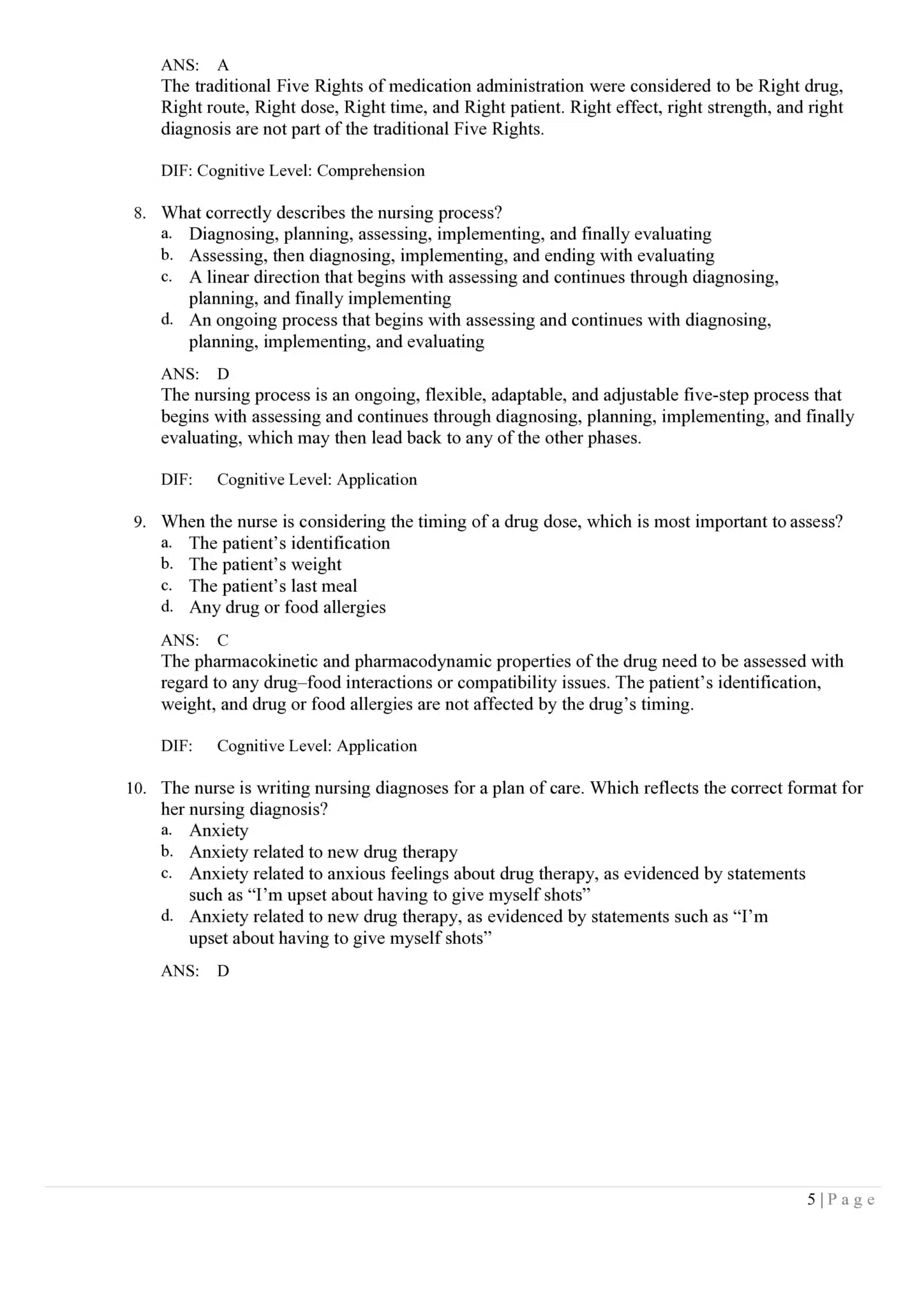
Yes. Each NCLEX-style pharmacology question includes a verified answer, and many provide concise rationales to reinforce safe medication administration, nursing process phases, and critical thinking for exams like NCLEX, ATI, and HESI.
What major topics are covered in this test bank?
The test bank covers pharmacological principles, drug administration, medication errors, patient education, over-the-counter and natural products, system-specific drug therapies (cardiac, respiratory, endocrine, neurologic, infectious disease, oncology, etc.), plus Canadian practice standards and safety guidelines.
How will I receive the test bank after purchase?
Delivery is instant. After secure checkout, you will get a direct PDF download link on the confirmation page, in your email receipt, and inside your account dashboard. The file is universal and works on iOS, Android, Windows, and macOS devices without extra software.
Download & Access
- Instant PDF download after purchase
- Works on iOS, Android, Windows, and macOS
- Trusted Canadian pharmacology exam prep resource
Related products
-
Sale!

Test bank for Stanhope and Lancaster’s Community Health Nursing in Canada, 4th Edition
0 - 0 reviews$26.00Original price was: $26.00.$23.00Current price is: $23.00. Add to cart -
Sale!

Principles of Anatomy and Physiology 16th Edition Test Bank
0 - 0 reviews$26.00Original price was: $26.00.$18.00Current price is: $18.00. Add to cart -
Sale!
Community/Public Health Nursing: Promoting the Health of Populations, 8th Edition Test Bank
0 - 0 reviews$26.00Original price was: $26.00.$23.00Current price is: $23.00. Add to cart -
Sale!
Test Bank for Foundations of Maternal-Newborn and Women’s Health Nursing, 8th Edition
0 - 0 reviews$26.00Original price was: $26.00.$23.00Current price is: $23.00. Add to cart


