
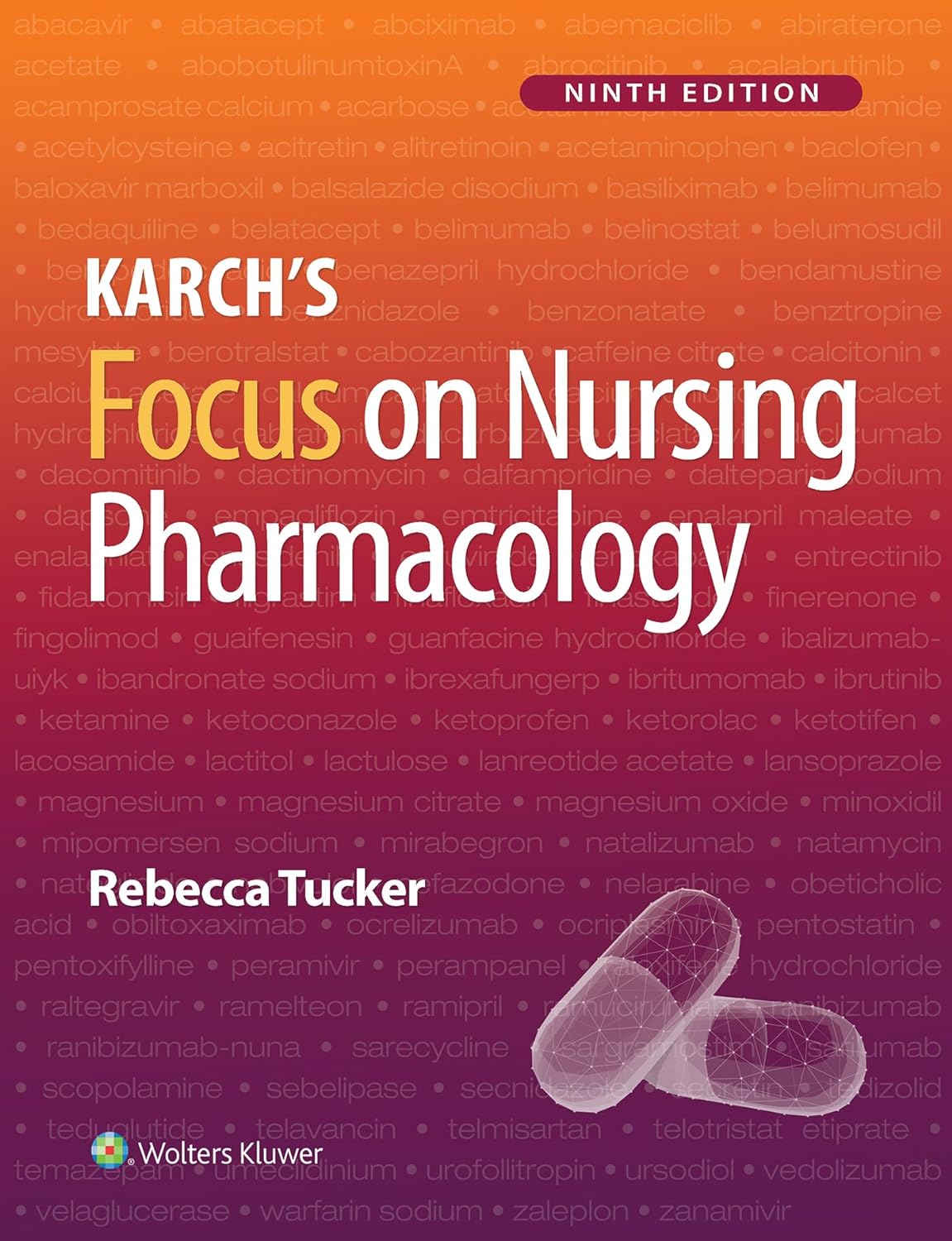
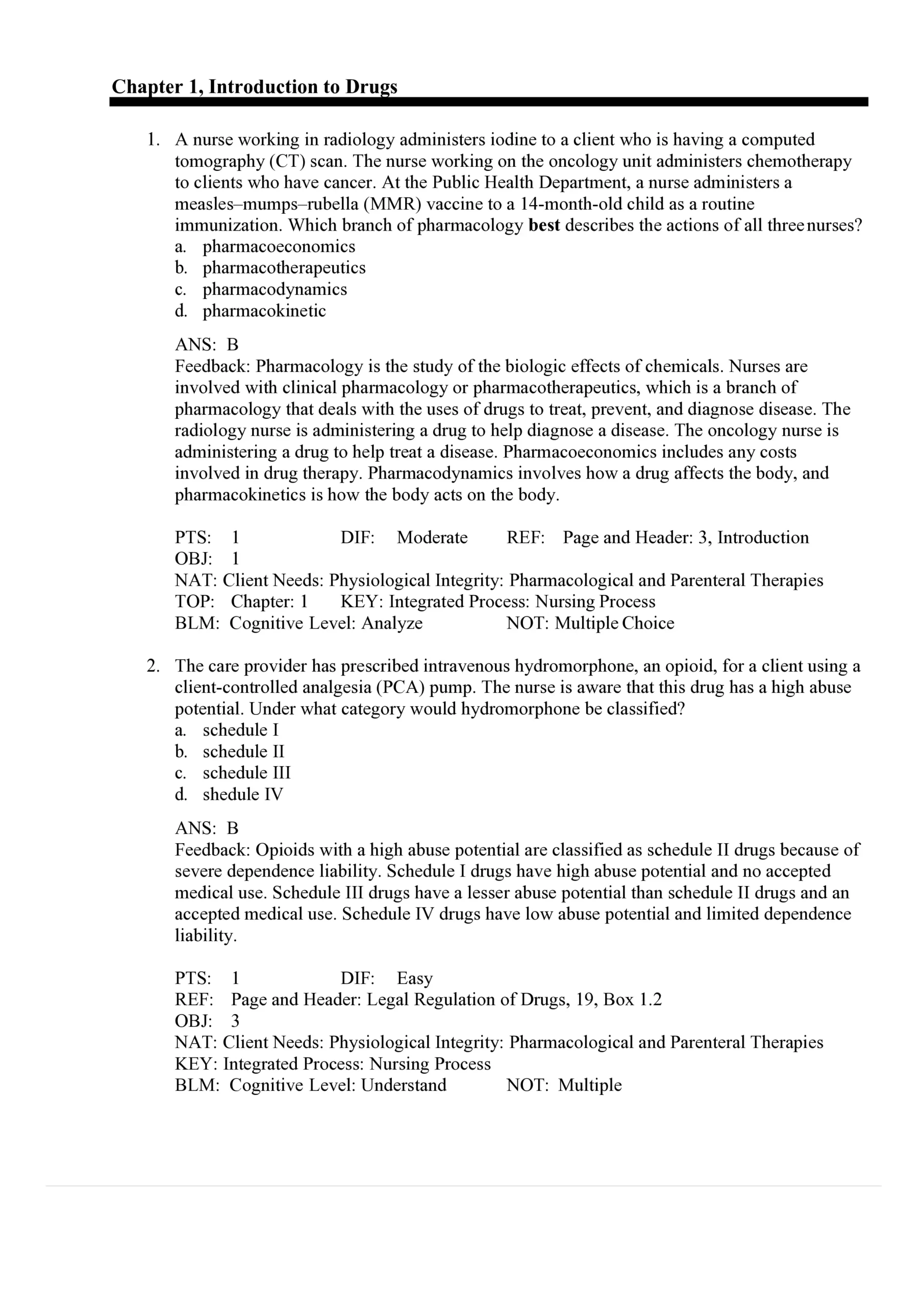
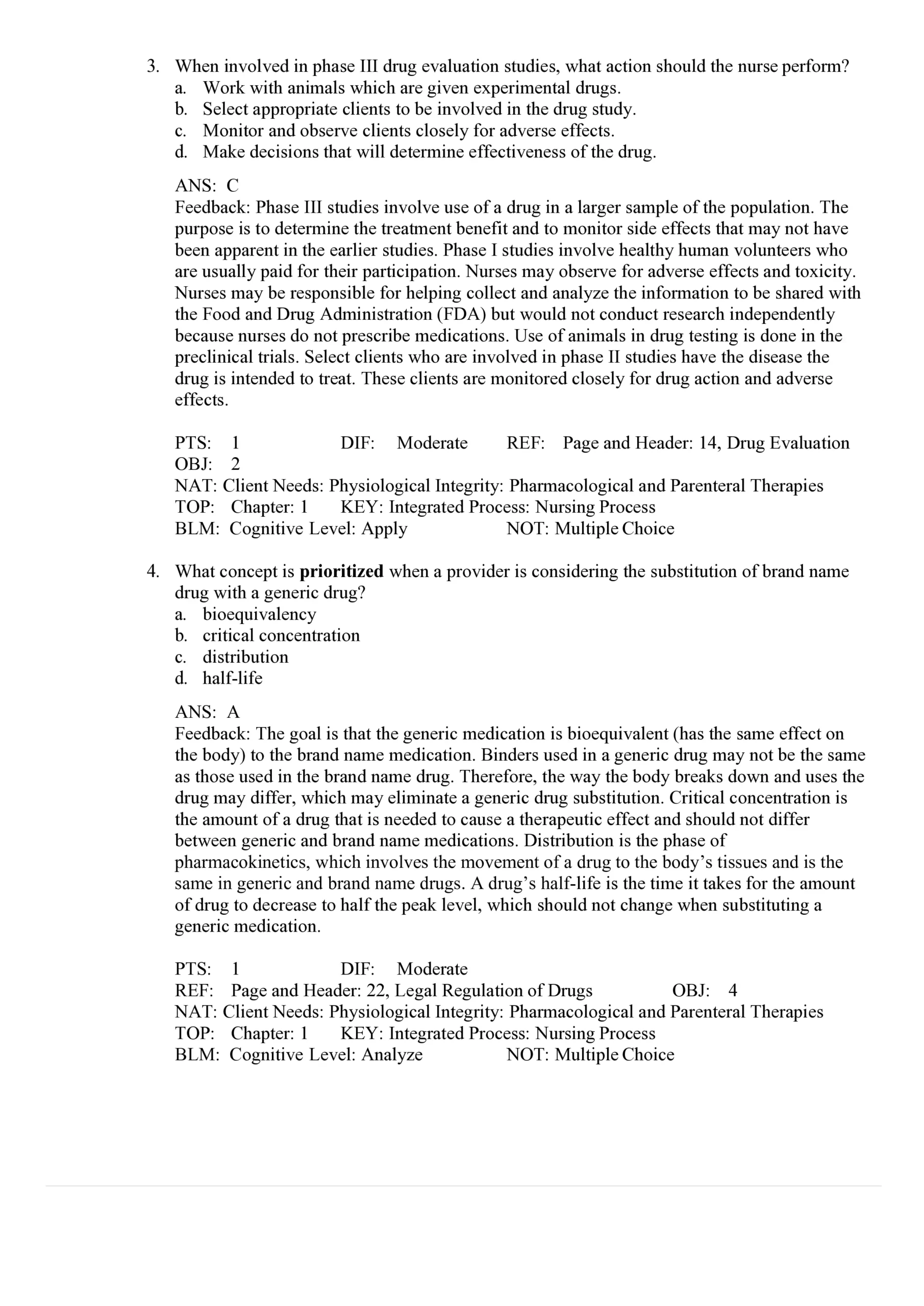
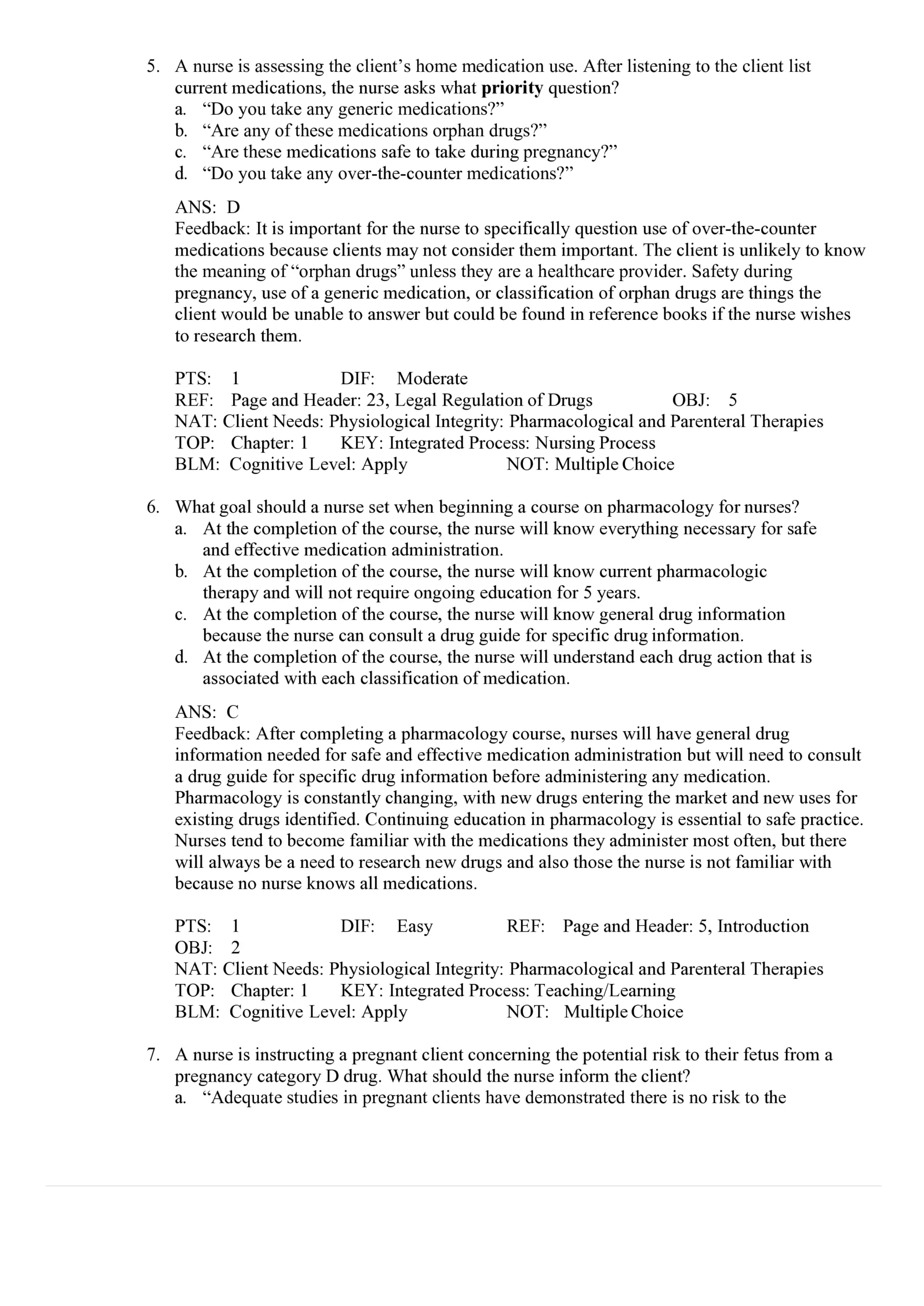
Test bank Karch’s Focus on Nursing Pharmacology, 9th Edition
$26.00 Original price was: $26.00.$17.00Current price is: $17.00.
Comprehensive test bank for Karch’s Focus on Nursing Pharmacology 9th Edition, featuring NCLEX-style questions, answer keys, and full chapter coverage.

Description
The Karch’s Focus on Nursing Pharmacology 9th Edition test bank is a comprehensive practice resource designed to help nursing students strengthen pharmacology knowledge, apply drug-therapy principles, and build confidence for NCLEX-style exams. This expertly crafted test bank covers all major drug classes, safety considerations, dosage calculations, and clinical decision-making scenarios. It is especially valuable for learners who need structured question practice aligned to the full pharmacology curriculum.
What This Test Bank Includes
This test bank follows the structure of the 9th edition textbook, covering essential topics such as drug mechanisms, toxic effects, anti-infective agents, nervous system drugs, endocrine therapies, cardiovascular medications, respiratory drugs, GI agents, and more. Chapters also include patient-safety considerations, nursing process applications, and clinical teaching points.
- 60+ pharmacology chapters covering every major drug class and body system
- NCLEX-style questions that reinforce critical-thinking skills
- Evidence-based feedback and rationales to support understanding
- Cultural considerations & safety alerts included where relevant
- Ideal for pharmacology courses, NCLEX prep, and nursing exams
- Instant digital download in high-quality, easy-to-study format
- Accurate answer keys included for efficient self-review
Why This Test Bank Helps
This resource is structured for nursing students preparing for course exams and national licensure tests, including NCLEX. By practicing with realistic scenarios—such as antihypertensive selection, renal impairment considerations, and patient teaching—you strengthen clinical judgement and improve your ability to apply pharmacology knowledge safely and effectively.
Table of Contents – Pharmacology 9th Edition test bank
- Chapter 1: Introduction to Drugs
- Chapter 2: Drugs and the Body
- Chapter 3: Toxic Effects of Drugs
- Chapter 4: The Nursing Process in Drug Therapy and Patient Safety
- Chapter 5: Dosage Calculations
- Chapter 6: Challenges to Effective Drug Therapy
- Chapter 7: Introduction to Cell Physiology
- Chapter 8: Anti-Infective Agents
- Chapter 9: Antibiotics
- Chapter 10: Antiviral Agents
- Chapter 11: Antifungal Agents
- Chapter 12: Antiprotozoal Agents
- Chapter 13: Anthelmintic Agents
- Chapter 14: Antineoplastic Agents
- Chapter 15: Introduction to the Immune Response and Inflammation
- Chapter 16: Antiinflammatory, Antiarthritis, and Related Agents
- Chapter 17: Immune Modulators
- Chapter 18: Vaccines and Sera
- Chapter 19: Introduction to Nerves and the Nervous System
- Chapter 20: Anxiolytic and Hypnotic Agents
- Chapter 21: Antidepressant Agents
- Chapter 22: Psychotherapeutic Agents
- Chapter 23: Antiseizure Agents
- Chapter 24: Antiparkinsonism Agents
- Chapter 25: Muscle Relaxants
- Chapter 26: Opioid Agonists, Opioid Antagonists, and Antimigraine Agents
- Chapter 27: General and Local Anesthetic Agents
- Chapter 28: Neuromuscular Junction Blocking Agents
- Chapter 29: Introduction to the Autonomic Nervous System
- Chapter 30: Adrenergic Agonists
- Chapter 31: Adrenergic Antagonists
- Chapter 32: Cholinergic Agonists
- Chapter 33: Anticholinergic Agents
- Chapter 34: Introduction to the Endocrine System
- Chapter 35: Hypothalamic and Pituitary Agents
- Chapter 36: Adrenocortical Agents
- Chapter 37: Thyroid and Parathyroid Agents
- Chapter 38: Agents to Control Blood Glucose Levels
- Chapter 39: Introduction to the Reproductive System
- Chapter 40: Drugs Affecting the Female Reproductive System
- Chapter 41: Drugs Affecting the Male Reproductive System
- Chapter 42: Introduction to the Cardiovascular System
- Chapter 43: Drugs Affecting Blood Pressure
- Chapter 44: Agents for Treating Heart Failure
- Chapter 45: Antiarrhythmic Agents
- Chapter 46: Antianginal Agents
- Chapter 47: Lipid-Lowering Agents
- Chapter 48: Drugs Affecting Blood Coagulation
- Chapter 49: Drugs Used to Treat Anemias
- Chapter 50: Introduction to the Renal System
- Chapter 51: Diuretic Agents
- Chapter 52: Drugs Affecting the Urinary Tract and the Bladder
- Chapter 53: Introduction to the Respiratory System
- Chapter 54: Drugs Acting on the Upper Respiratory Tract
- Chapter 55: Drugs Acting on the Lower Respiratory Tract
- Chapter 56: Introduction to the Gastrointestinal System
Sample Questions
- Question 1. The nurse is caring for a 39-year-old client of African descent who is 25 lb (11.36 kg) overweight and who has received a new diagnosis of hypertension. What initial drug therapy should the nurse anticipate?
- a. angiotensin-converting enzyme (ACE) inhibitor
- b. beta-blocker
- c. calcium channel blocker
- d. diuretic
Correct Answer: d. diuretic
Rationale: Clients of African descent are at highest risk for developing hypertension and tend to respond best to single-drug therapy and diuretics. First-line use is typically a diuretic in combination with diet and lifestyle changes. Calcium channel blockers or alpha-adrenergic blockers are often added next. These clients are generally less responsive to ACE inhibitors and beta-blockers.
- Question 2. The clinic nurse assesses a client taking benazepril to control hypertension. What change in the client’s health status may require a change in drug therapy?
- a. The client takes a selective serotonin reuptake inhibitor (SSRI) for depression.
- b. The client is treated for hepatitis A.
- c. The client’s creatinine clearance is steadily declining.
- d. The client is diagnosed with gastroesophageal reflux disease.
Correct Answer: c. The client’s creatinine clearance is steadily declining.
Rationale: Benazepril is an ACE inhibitor and is contraindicated in the presence of impaired renal function. A declining creatinine clearance indicates worsening renal status and may require a change in therapy. Mental illness, hepatic disease, and GERD are not specific contraindications for this drug.
- Question 3. A client has been prescribed losartan for hypertension. What client teaching points should the nurse include about this drug?
- a. “You need to report the onset of a fever or persistent cough to your health care provider.”
- b. “Limit your fluid intake to decrease urinary output, if this becomes problematic for you.”
- c. “Monitor your blood pressure once a week and make sure to record the results.”
- d. “It is recommended you take this medication late in the day to prevent sleepiness.”
Correct Answer: a. “You need to report the onset of a fever or persistent cough to your health care provider.”
Rationale: Losartan, an angiotensin II receptor blocker, is associated with cough, back pain, fever, muscle weakness, and upper respiratory tract infections. The client should report fever or cough to the provider. Fluid intake should remain normal, blood pressure should be monitored more frequently (especially at initiation), and the drug is best taken in the morning, not late in the day.
FAQ
Q1: Is this test bank suitable for NCLEX preparation?
Yes. The questions support clinical reasoning, nursing process application, and safe pharmacology practice—key NCLEX competencies.
Q2: How is the test bank delivered?
It is provided as a digital download immediately after purchase, ensuring fast and convenient access.
Get Started Now
Strengthen your exam readiness and build pharmacology confidence with this trusted, comprehensive test bank. Download instantly and begin studying today!
Related Test Banks
-
- Lehne’s Pharmacology for Nursing Care 11th Edition Test Bank
- Pharmacology: A Patient-Centered Nursing Process Approach 11th Edition
- Abrams’ Clinical Drug Therapy 13th Edition Test Bank
- Introduction to Clinical Pharmacology 12th Edition
- Pharmacotherapeutics for Advanced Practice Nurse Prescribers 6th Edition
- Lilley’s Pharmacology for Canadian Health Care Practice 4th Edition
Related products
-

Test Bank for Davis Advantage for Fundamentals of Nursing, 4th Edition by Judith M. Wilkinson
0 - 0 reviews$23.00 Add to cart -
Sale!

Abrams’ Clinical Drug Therapy: Rationales for Nursing Practice, 13th Edition Test Bank
0 - 0 reviews$26.00Original price was: $26.00.$23.00Current price is: $23.00. Add to cart -
Sale!
Principles of Anatomy and Physiology 16th Edition Test Bank
0 - 0 reviews$26.00Original price was: $26.00.$18.00Current price is: $18.00. Add to cart -
Sale!
Test Bank for Davis Advantage for Basic Nursing: Thinking, Doing, and Caring, 3rd Edition by Leslie S. Treas, Karen L. Barnett & Mable H. Smith
0 - 0 reviews$26.00Original price was: $26.00.$23.00Current price is: $23.00. Add to cart


