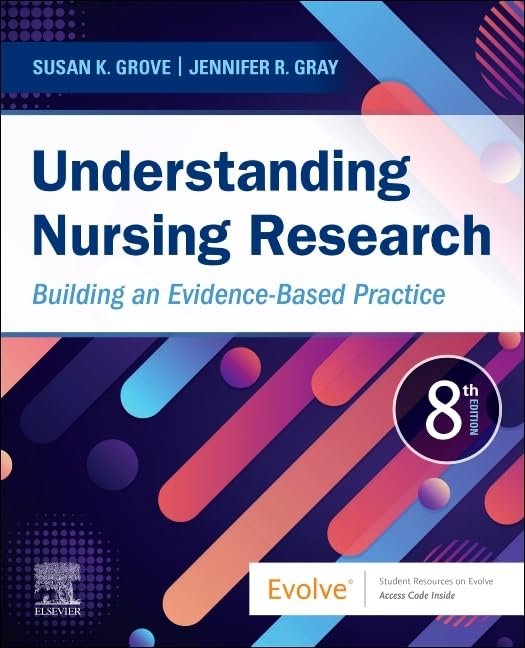
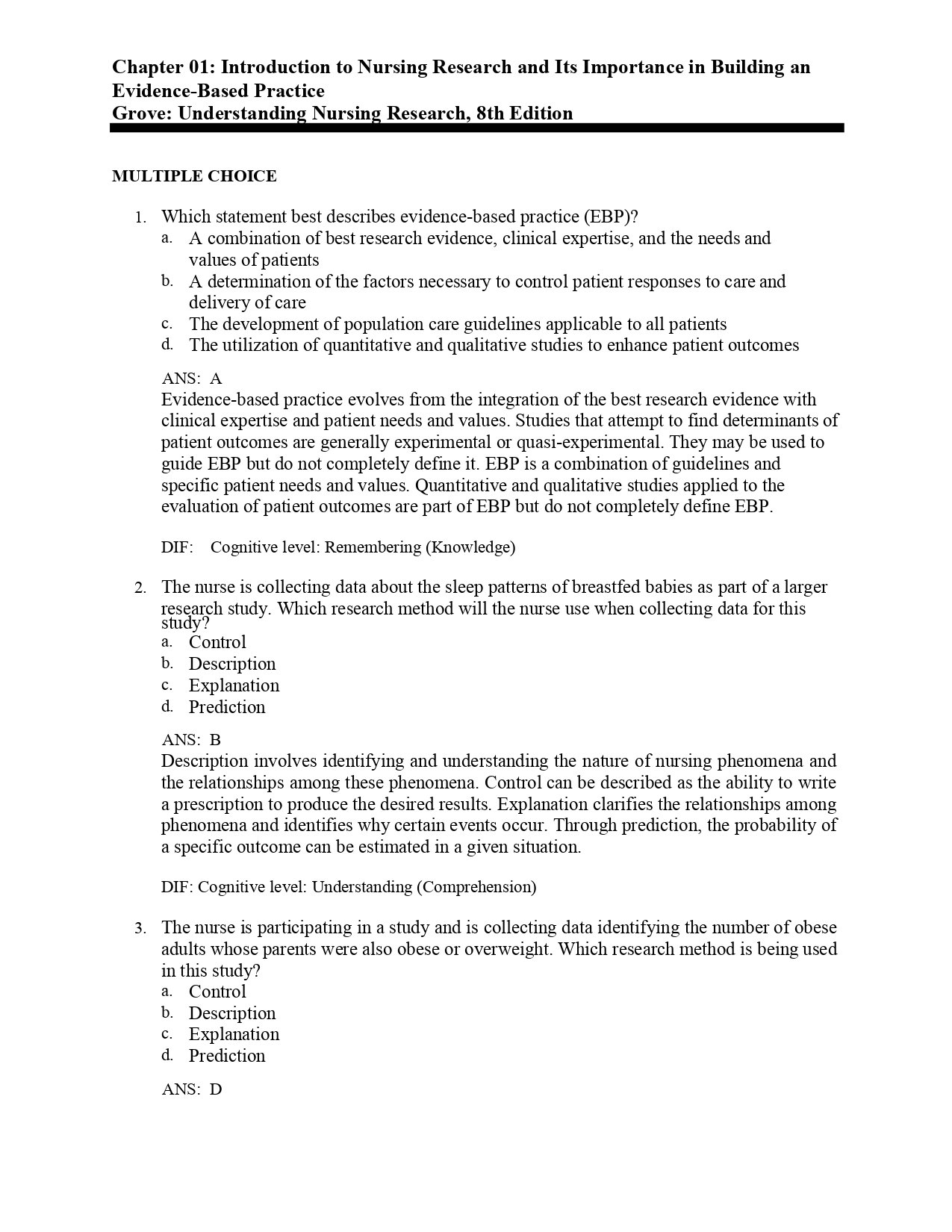
Understanding Nursing Research 8th Edition Test Bank (Grove & Gray)
$18.00
Prepare for your nursing exams with the Test Bank for Understanding Nursing Research 8th Edition. Comprehensive coverage to ensure your success awaits!

Description
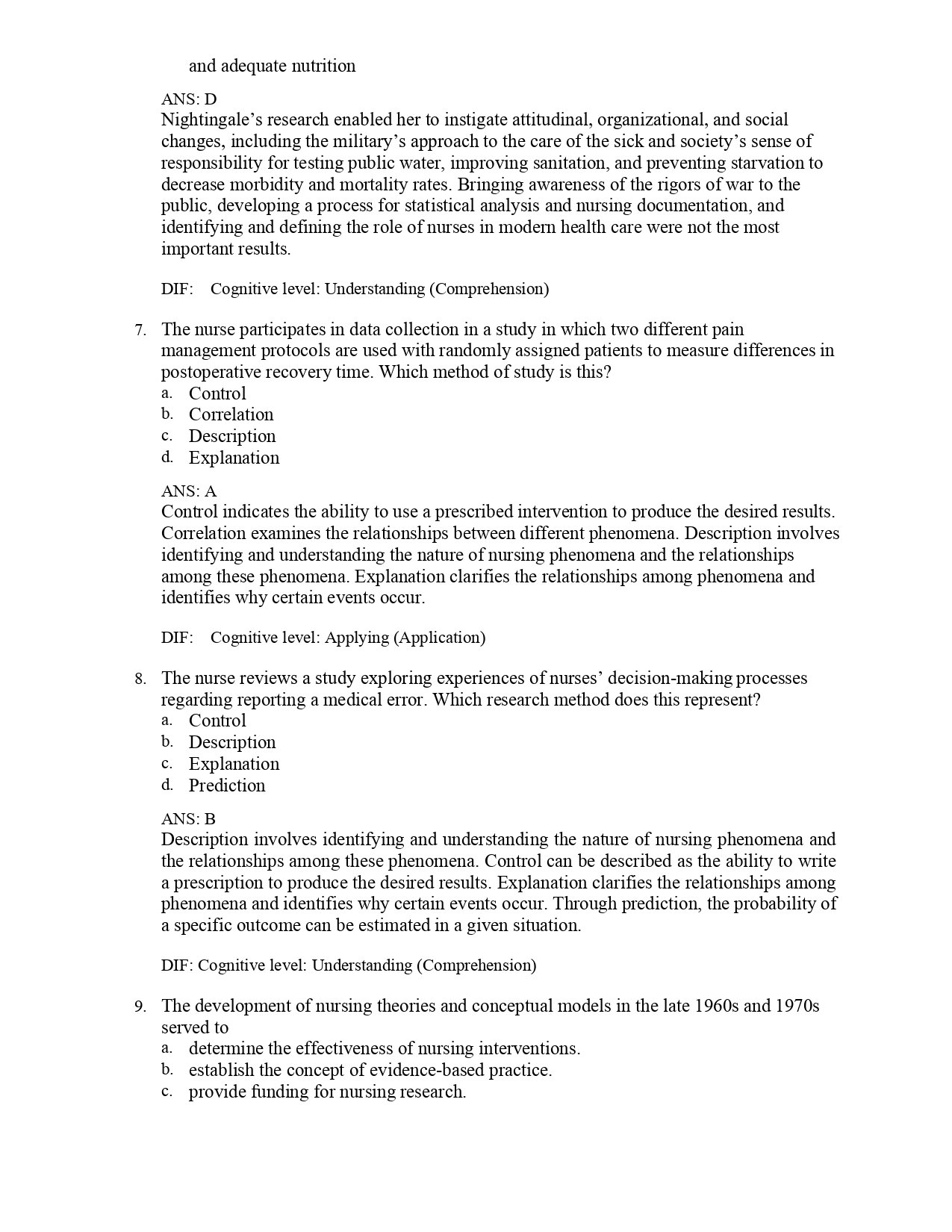
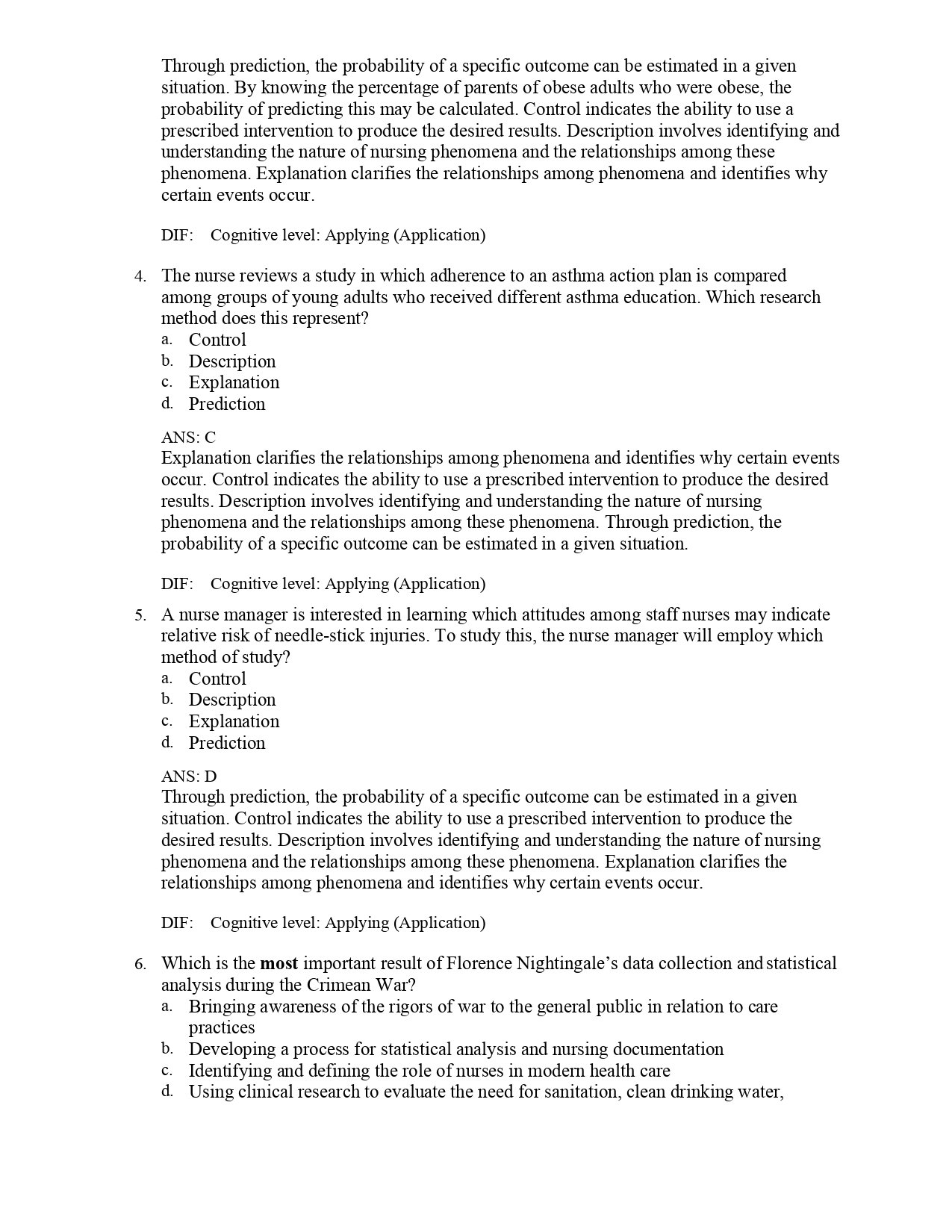
The Understanding Nursing Research 8th Edition Test Bank is a comprehensive, evidence-based resource designed to help nursing students master research principles, critically evaluate studies, and build strong foundations for evidence-based practice. Featuring high-quality multiple-choice questions aligned with Grove & Gray’s widely used textbook, this test bank reinforces key concepts across both quantitative and qualitative research methodologies.
Why This Test Bank Helps
This test bank supports students preparing for nursing exams, research coursework, and evidence-based practice competencies. Each question is crafted to improve analytical thinking, deepen understanding of research methodology, and strengthen your ability to apply research findings in clinical decision-making.
What’s Inside
Content follows the full textbook structure, including:
- Introduction to research foundations and evidence-based practice
- Quantitative and qualitative research concepts
- Ethics, sampling, measurement, and data collection
- Critical appraisal and statistical reasoning
- Mixed-methods and outcomes research
Features Included
- High-quality NCLEX-style and classroom-style questions
- Detailed rationales to support learning
- Covers all 14 chapters of Grove & Gray’s textbook
- Supports exam preparation and evidence-based nursing practice
- Helps strengthen critical appraisal and research application skills
- Instant digital download, accessible across devices
- Ideal for pre-licensure and advanced nursing students
Table of Contents— Understanding Nursing Research, 8th Edition
- 1. Introduction to Nursing Research and Its Importance in Building an Evidence-Based Practice
- 2. Introduction to Quantitative Research
- 3. Introduction to Qualitative Research
- 4. Examining Ethics in Nursing Research
- 5. Examining Research Problems, Purposes, and Hypotheses
- 6. Understanding and Critically Appraising the Literature Review
- 7. Understanding Theory and Research Frameworks
- 8. Clarifying Quantitative Research Designs
- 9. Examining Populations and Samples in Research
- 10. Clarifying Measurement and Data Collection in Quantitative Research
- 11. Understanding Statistics in Research
- 12. Critical Appraisal of Quantitative and Qualitative Research for Nursing Practice
- 13. Building an Evidence-Based Nursing Practice
- 14. Introduction to Additional Research Methodologies in Nursing: Mixed Methods and Outcomes Research
Sample Questions – Chapter 14: Mixed Methods and Outcomes Research
- Question 1. Which of the following accurately describes the purpose of a mixed-methods study?
- a. To capitalize on the weaknesses of numbers and words to answer different components or stages of a research question
- b. To capitalize on the weaknesses of numbers and words to answer similar components or stages of a research question
- c. To capitalize on the strengths of numbers and words to answer similar components or stages of a research question
- d. To capitalize on the strengths of numbers and words to answer different components or stages of a research question
Correct Answer: d. To capitalize on the strengths of numbers and words to answer different components or stages of a research question
Rationale: Mixed-methods studies are designed to use the strengths of both quantitative (numbers) and qualitative (words) approaches to address different but related parts or stages of a research question. The other options incorrectly focus on weaknesses or on similar components instead of different components.
- Question 2. The mixed-methods design strategy that begins with the collection, analysis, and interpretation of quantitative data, followed by a qualitative phase is known as:
- a. convergent concurrent strategy
- b. exploratory sequential strategy
- c. explanatory sequential strategy
- d. parallel design
Correct Answer: c. explanatory sequential strategy
Rationale: In explanatory sequential designs, the researcher first collects and analyzes quantitative data and then conducts a qualitative phase to help explain or expand on the quantitative findings. Convergent concurrent and parallel designs collect both types of data at the same time, while exploratory sequential starts with qualitative and then moves to quantitative.
- Question 3. What mixed-methods design strategy is used when the researcher begins with collection and analysis of qualitative data, followed by collection of quantitative data?
- a. Convergent concurrent strategy
- b. Exploratory sequential strategy
- c. Explanatory sequential strategy
- d. Parallel design
Correct Answer: b. Exploratory sequential strategy
Rationale: Exploratory sequential designs begin with qualitative data collection and analysis, and are used to explore a phenomenon in depth before developing or refining quantitative measures. Convergent concurrent/parallel designs collect qualitative and quantitative data at the same time, and explanatory sequential designs start with quantitative data before a qualitative follow-up.
FAQ
Q1: Does this test bank include all chapters from the 8th edition?
Yes. The test bank covers all 14 chapters exactly as outlined in the textbook table of contents.
Q2: Is this test bank suitable for exam review?
Absolutely. The questions are structured to support exam preparation, critical thinking, and evidence-based practice competency.
Related Test Banks
- Essentials of Nursing Research 10th Edition Test Bank
- Professional Nursing Concepts: Challenges 10th Edition Test Bank
- Nursing Today: Transition and Trends 11th Edition Test Bank
- Contemporary Nursing: Issues, Trends, & Management 9th Edition Test Bank
- Nursing: A Concept-Based Approach to Learning 4th Edition Test Bank
Ready to Strengthen Your Research Knowledge?
Download the Understanding Nursing Research 8th Edition Test Bank today and build confidence in evaluating, interpreting, and applying nursing research.
Related products
-

Test bank for Physical Examination and Health Assessment, 9th Edition
$18.00 Add to cart -

Principles of Anatomy and Physiology 16th Edition Test Bank
$18.00 Add to cart -
Test Bank — Davis Advantage for Understanding Medical-Surgical Nursing, 7th Edition
$18.00 Add to cart -
Test Bank for Lewis’s Medical-Surgical Nursing: Assessment and Management of Clinical Problems, 12th Edition
$18.00 Add to cart