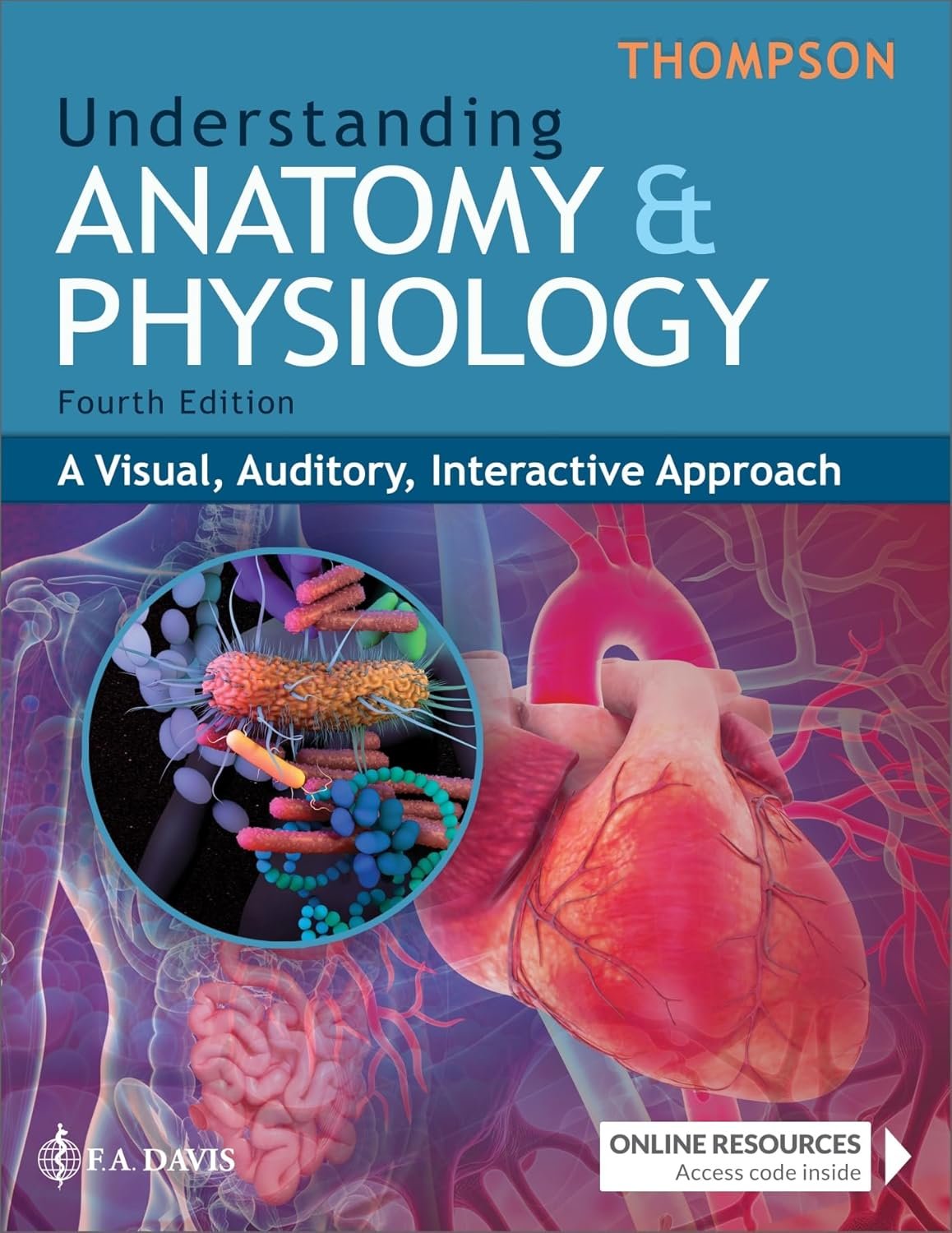
Test Bank for Understanding Anatomy & Physiology: A Visual, Auditory, Interactive Approach, 4th Edition by Gale Sloan Thompson
$30.00 Original price was: $30.00.$26.00Current price is: $26.00.
Comprehensive test bank for Understanding Anatomy & Physiology 4th Edition, with system-based questions and answers that reinforce core A&P concepts for nursing and health programs.

Description
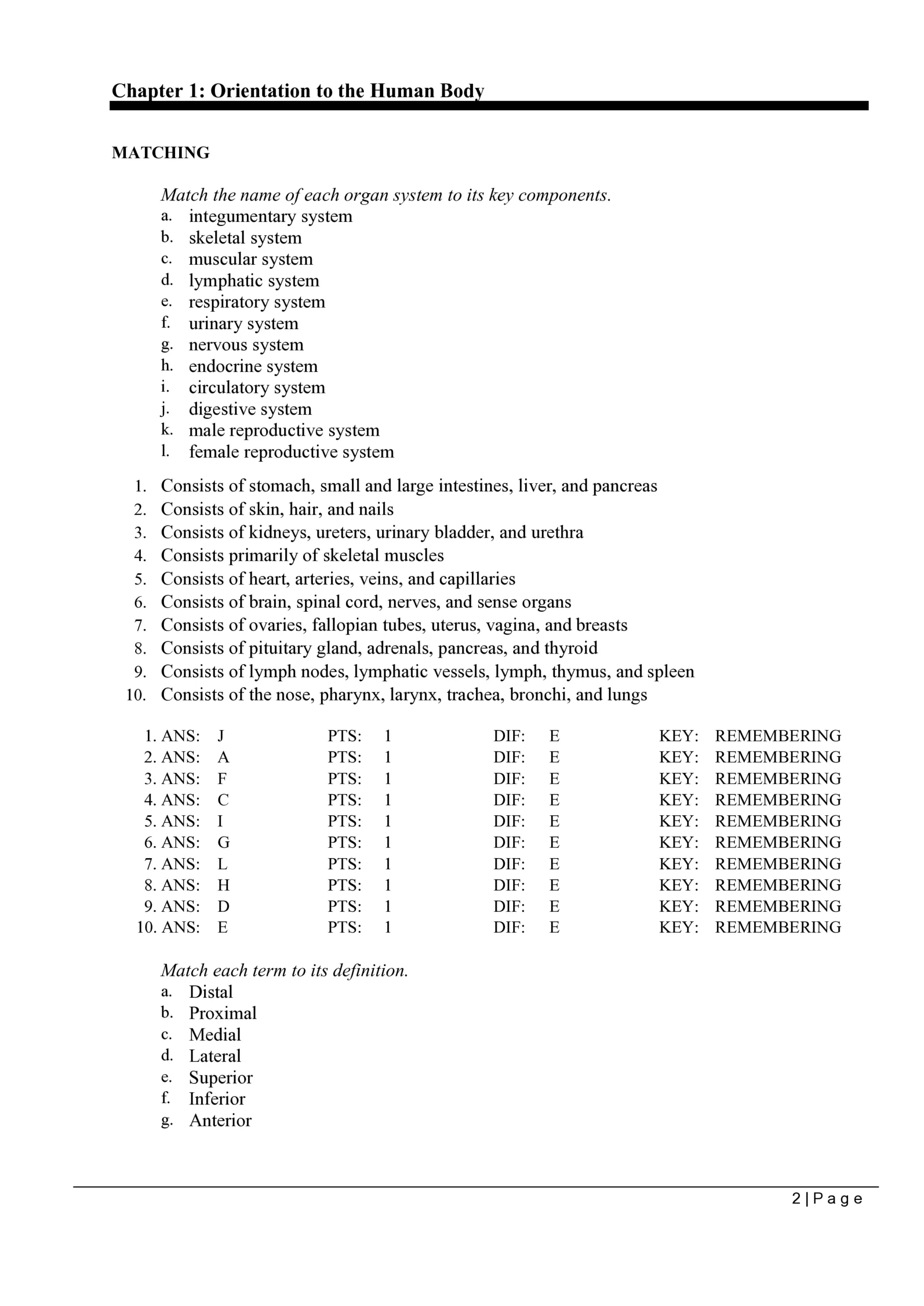
The understanding anatomy and physiology 4th edition test bank is a structured question bank designed to support students using Understanding Anatomy & Physiology: A Visual, Auditory, Interactive Approach, 4th Edition by Gale Sloan Thompson. It provides clear, exam-style questions that reinforce key A&P concepts across all body systems, helping learners build a solid foundation for nursing, allied health, and prerequisite science courses.
What understanding anatomy and physiology, 4th edition test bank Covers
This test bank follows the full chapter sequence of the textbook, from orientation to the human body and chemistry of life through cells, tissues, systems, and human development. Question sets address normal structure and function, basic homeostasis, and clinically relevant concepts that often appear on course exams.
- Complete coverage from orientation, cells, tissues, and microbiome to all major body systems
- System-based chapters for skeletal, muscular, nervous, endocrine, cardiovascular, respiratory, digestive, urinary, and reproductive systems
- Questions on blood, fluid and electrolyte balance, acid–base balance, and metabolism
- Concept checks on pregnancy, human development, and heredity to link A&P with life span changes
- Mix of recall, understanding, and application-level items for better exam preparation
- Clear answers provided for efficient self-testing and remediation
- Ideal companion for visual, auditory, and interactive learners using the 4th edition text
Why This anatomy and physiology Test Bank Helps
This resource is ideal for anatomy and physiology students who need consistent practice and quick feedback. By working through chapter-aligned questions, you can identify weak areas early, strengthen your understanding of terminology and structure–function relationships, and improve your performance on quizzes, midterms, and finals. It also supports long-term retention of A&P concepts that are essential for later nursing and health-profession exams.
Table of Contents – Understanding Anatomy & Physiology 4th Edition
- Chapter 1: Orientation to the Human Body
- Chapter 2: Chemistry of Life
- Chapter 3: Cells
- Chapter 4: Human Microbiome
- Chapter 5: Tissues
- Chapter 6: Integumentary System
- Chapter 7: Bones & Bone Tissue
- Chapter 8: Skeletal System
- Chapter 9: Joints
- Chapter 10: Muscular System
- Chapter 11: Nervous System
- Chapter 12: Sense Organs
- Chapter 13: Endocrine System
- Chapter 14: Blood
- Chapter 15: Heart
- Chapter 16: Vascular System
- Chapter 17: Lymphatic & Immune Systems
- Chapter 18: Respiratory System
- Chapter 19: Urinary System
- Chapter 20: Fluid, Electrolyte & Acid-Base Balance
- Chapter 21: Digestive System
- Chapter 22: Nutrition & Metabolism
- Chapter 23: Reproductive Systems
- Chapter 24: Pregnancy & Human Development
- Chapter 25: Heredity
Sample Questions – Chapter 7: Bones & Bone Tissue
- Which classification of bone protects organs or provides a large surface area for the attachment of muscles?
- a. Long bones
- b. Short bones
- c. Flat bones
- d. Irregular bones
Answer: C
Rationale: Flat bones are thin, flat, and often curved. They protect organs and provide a broad surface area for muscle attachment. Long bones act as levers, short bones are cube-shaped, and irregular bones vary in shape.
- The central, shaftlike portion of a long bone is called the:
- a. epiphysis
- b. diaphysis
- c. endosteum
- d. periosteum
Answer: B
Rationale: The diaphysis is the shaft of a long bone. The epiphyses form the ends, the endosteum lines the medullary cavity, and the periosteum covers the bone surface.
- Which substance covers the surface of the epiphysis of a long bone?
- a. Red bone marrow
- b. Trabeculae
- c. Fibrocartilage
- d. Articular cartilage
Answer: D
Rationale: Articular cartilage (a type of hyaline cartilage) covers epiphyses to reduce friction in joints. Trabeculae form spongy bone, red marrow fills medullary cavities in children, and fibrocartilage is found in intervertebral discs.
FAQ
Q1: Who is this test bank best suited for?
This test bank is designed for college-level anatomy and physiology students, especially those in pre-nursing, nursing, and allied health programs using the 4th edition of Understanding Anatomy & Physiology.
Q2: How is the test bank delivered?
The test bank is provided as a digital file for instant download after purchase, allowing you to start reviewing and practicing A&P questions right away.
Related Test Banks
- Anatomy & Physiology, 11th Edition — Test Bank
- Understanding Anatomy & Physiology, 3rd Edition — Test Bank
- Human Anatomy & Physiology, 12th Edition — Test Bank
- Principles of Anatomy & Physiology, 16th Edition — Test Bank
- The Cell: A Molecular Approach, 9th Edition — Test Bank
- Lehninger Principles of Biochemistry, 8th Edition — Test Bank
Get Started Today
Build a strong anatomy and physiology foundation and boost your exam readiness with this comprehensive, chapter-organized test bank. Download now and start practicing smarter, not harder.
Related products
-
Sale!

Principles of Anatomy and Physiology 16th Edition Test Bank
0 - 0 reviews$26.00Original price was: $26.00.$18.00Current price is: $18.00. Add to cart -
Sale!

Test Bank for Anatomy and Physiology, 11th Edition by Kevin T. Patton
0 - 0 reviews$26.00Original price was: $26.00.$23.00Current price is: $23.00. Add to cart