
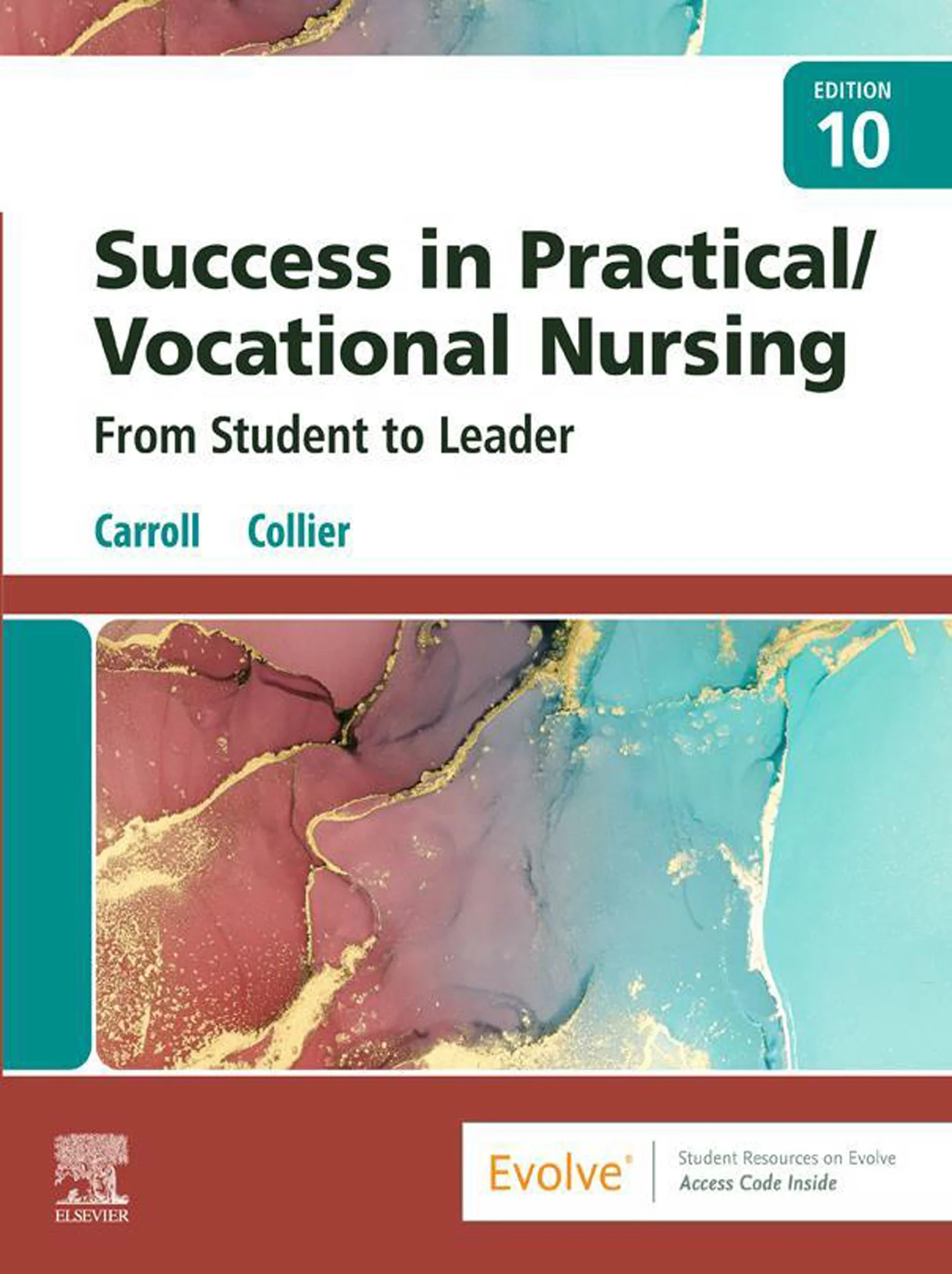
Test bank for Success in Practical/Vocational Nursing 10th Edition
$18.00
NCLEX-PN–style test bank for Success in Practical/Vocational Nursing 10th Edition, covering ethics, communication, cultural competence, leadership, and professional practice.

Description
The Success in Practical/Vocational Nursing 10th Edition Test Bank is a complete exam-preparation resource designed to support PN/VN students in developing the skills, knowledge, and professional behaviors required for practical nursing success. Covering essential foundational content such as study skills, critical thinking, communication, cultural competence, ethics, leadership, workforce readiness, licensure, and interdisciplinary practice, this test bank provides reliable practice questions aligned to real-world PN curriculum expectations.
What This Test Bank Includes
This test bank follows the full structure of the 10th edition textbook, offering NCLEX-PN–style items that help learners apply knowledge across personal development, patient communication, ethical and legal issues, cultural competence, interprofessional collaboration, leadership, and clinical reasoning.
- 19 chapters covering practical nursing foundations, ethics, legal responsibilities, communication, culture, teamwork, and licensure
- NCLEX-PN format questions that reinforce clinical judgment & safe practice
- High-quality items supporting psychosocial integrity, patient-centered care, and professional responsibility
- Focused coverage of culturally competent care and individual worth
- Leadership, delegation, and collaboration content aligned to PN practice
- Instant digital download for easy study access
- Detailed answer keys included for self-assessment
Why This Test Bank Helps
This resource is ideal for PN/VN students preparing for class exams or the NCLEX-PN. With emphasis on communication, cultural sensitivity, ethical decision-making, and safe care delivery, the test bank strengthens essential competencies required in modern practical nursing roles.
TABLE OF CONTENTS – Principles of Anatomy and Physiology, 16th Edition
- Chapter 1: An Introduction to the Human Body
- Chapter 2: The Chemical Level of Organization
- Chapter 3: The Cellular Level of Organization
- Chapter 4: The Tissue Level of Organization
- Chapter 5: The Integumentary System
- Chapter 6: The Skeletal System: Bone Tissue
- Chapter 7: The Skeletal System: The Axial Skeleton
- Chapter 8: The Skeletal System: The Appendicular Skeleton
- Chapter 9: Joints
- Chapter 10: Muscular Tissue
- Chapter 11: The Muscular System
- Chapter 12: Nervous Tissue
- Chapter 13: The Spinal Cord and Spinal Nerves
- Chapter 14: The Brain and Cranial Nerves
- Chapter 15: The Autonomic Nervous System
- Chapter 16: Sensory, Motor, and Integrative Systems
- Chapter 17: The Special Senses
- Chapter 18: The Endocrine System
- Chapter 19: The Cardiovascular System: The Blood
- Chapter 20: The Cardiovascular System: The Heart
- Chapter 21: The Cardiovascular System: Blood Vessels and Hemodynamics
- Chapter 22: The Lymphoid (Lymphatic) System and Immunity
- Chapter 23: The Respiratory System
- Chapter 24: The Digestive System
- Chapter 25: Metabolism and Nutrition
- Chapter 26: The Urinary System
- Chapter 27: Fluid, Electrolyte, and Acid–Base Homeostasis
- Chapter 28: The Genital (Reproductive) Systems
- Chapter 29: Development and Inheritance
Sample Questions Included
Examples from the test bank include:
- Question 1. Which of the following is NOT a major function of the blood?
- a) Transportation of nutrients
- b) Regulation of blood pH
- c) Protection against infectious disease
- d) Transportation of heat
- e) Production of oxygen
Correct Answer: e) Production of oxygen
Rationale: Blood transports nutrients, heat, and waste products, helps regulate pH, and contributes to immune protection. Oxygen is produced by cellular respiration, not by blood itself.
- Question 2. Which of the following is NOT a true statement regarding blood?
- a) The normal average temperature of blood is around 100.4° F.
- b) The normal pH range for blood is 7.35–7.45.
- c) Hemocytoblasts are a common component of circulating blood.
- d) The most numerous circulating blood cell is the RBC.
- e) Blood is a liquid connective tissue consisting of formed elements and a liquid extracellular matrix.
Correct Answer: c) Hemocytoblasts are a common component of circulating blood.
Rationale: Hemocytoblasts (hematopoietic stem cells) reside in red bone marrow, not in circulating blood. The other statements accurately describe blood properties.
- Question 3. The hematocrit is a measure of the percentage of whole blood occupied by:
- a) WBCs
- b) platelets
- c) RBCs
- d) plasma
- e) plasma proteins
Correct Answer: c) RBCs
Rationale: Hematocrit measures the proportion of blood volume occupied by red blood cells, expressed as a percentage of total blood volume.
FAQ
Q1: Is this test bank helpful for NCLEX-PN preparation?
Yes. The test bank includes NCLEX-style questions that reinforce communication, ethical/legal practice, cultural competence, and safe care—core areas tested on the NCLEX-PN.
Q2: How will I receive the test bank?
You will receive instant digital access after purchase, allowing you to begin reviewing immediately.
Related Test Banks
- Success in Practical/Vocational Nursing 10th Edition (this product)
- Fundamentals of Nursing 10th Edition Test Bank
- Fundamentals of Nursing 11th Edition Test Bank
- Davis Advantage Basic Nursing 3rd Edition Test Bank
- Fundamentals of Nursing Active Learning 3rd Edition Test Bank
- Potter & Perry Canadian Fundamentals of Nursing 7th Edition Test Bank
Prepare for PN/VN Success
Build confidence, improve clinical reasoning, and master key concepts in practical nursing. Download the test bank today and accelerate your exam readiness.
Share your thoughts!
Let us know what you think...
Only logged in customers who have purchased this product may leave a review. Log in now
Related products
-

Principles of Anatomy and Physiology 16th Edition Test Bank
$18.00 Add to cart -

Test bank for Davis Advantage for Townsend’s Essentials of Psychiatric Mental Health Nursing 9th Edition
$18.00 Add to cart -
Test Bank for Discovering the Life Span, 5th Edition by Robert S. Feldman
$18.00 Add to cart -
Sale!
Test Bank for Medical-Surgical Nursing: Concepts and Practice, 8th Edition
$18.00Original price was: $18.00.$17.00Current price is: $17.00. Add to cart


What others are saying
There are no contributions yet.