
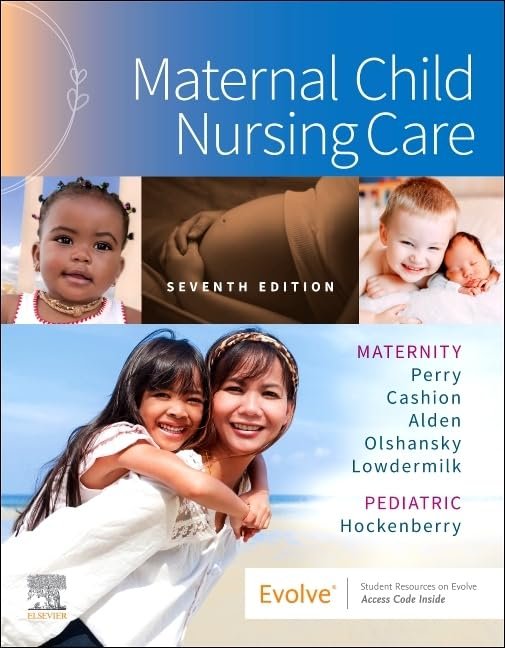
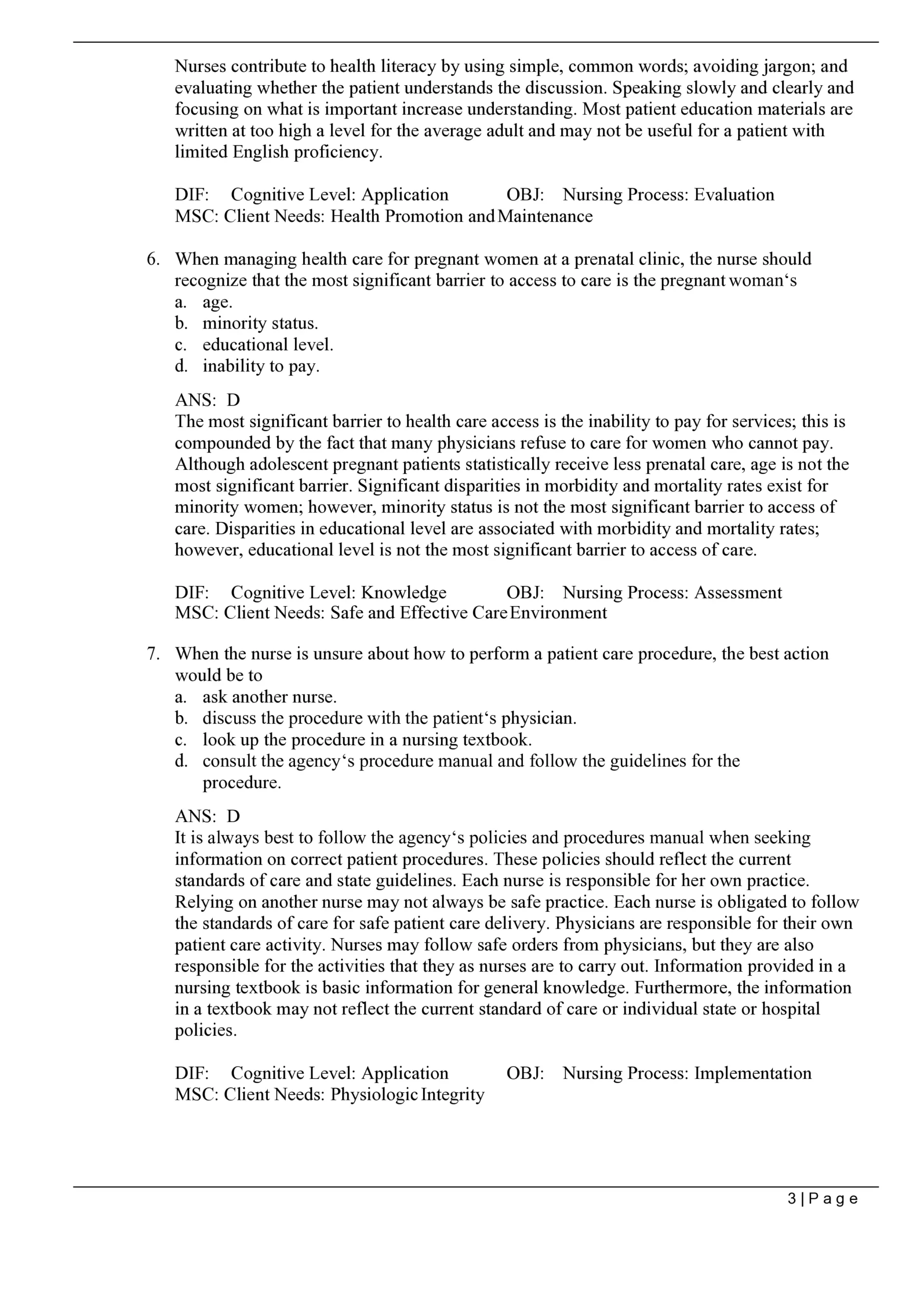
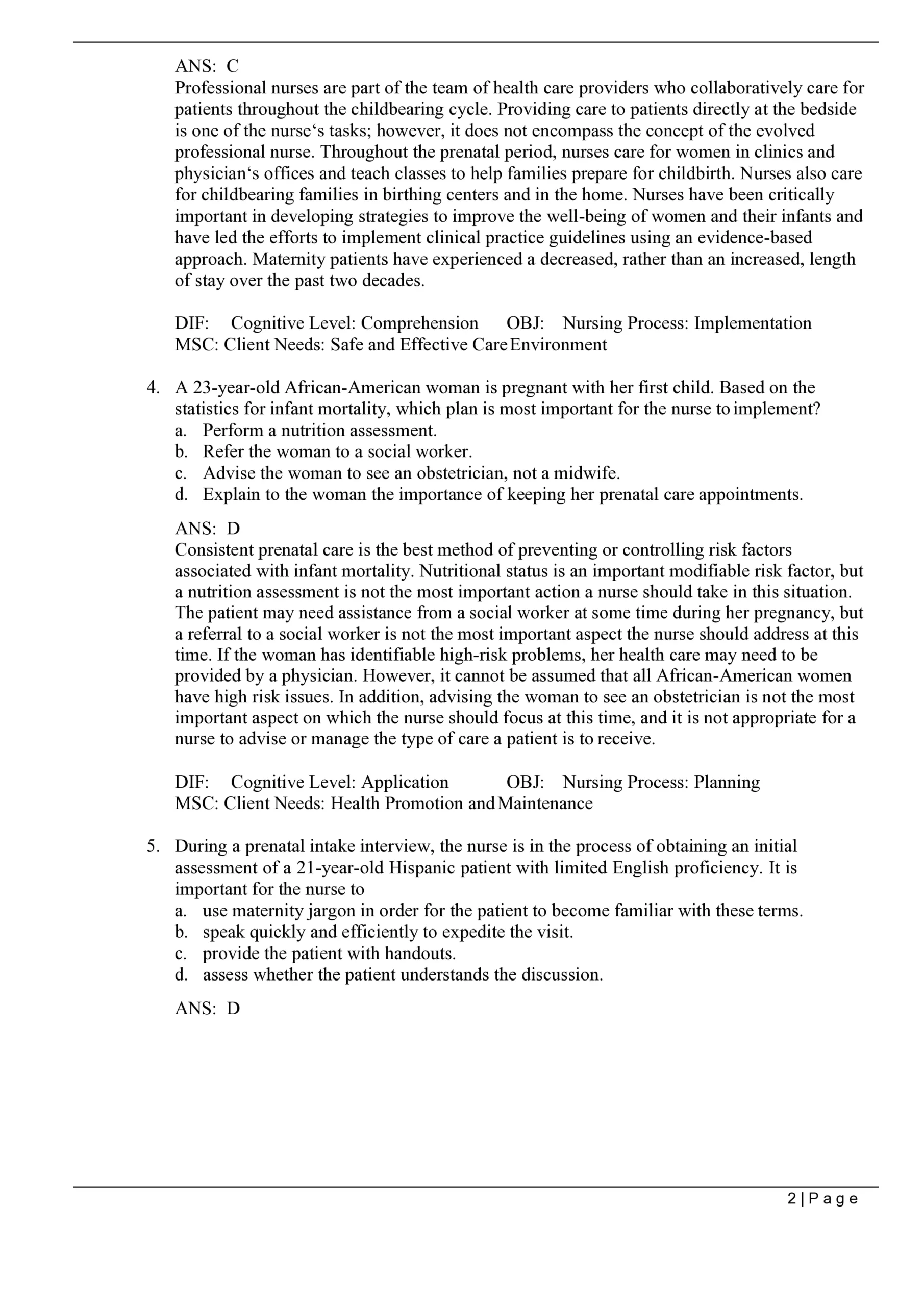
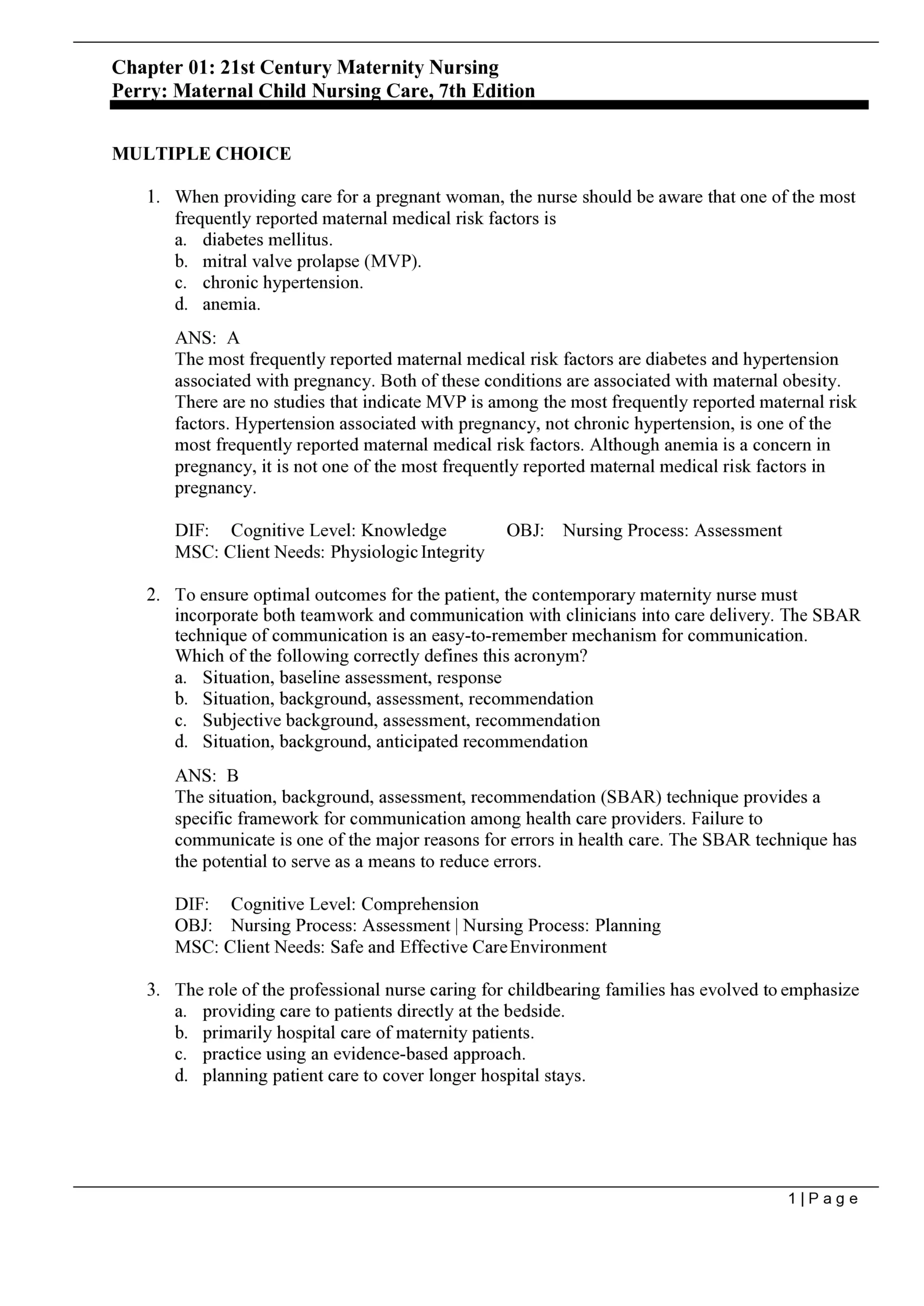
Test Bank for Maternal Child Nursing Care 7th Edition
$23.00
Comprehensive test bank for Maternal Child Nursing Care 7th Edition with NCLEX-style maternity and pediatric questions to build clinical judgment and exam confidence.

Description
The maternal child nursing care 7th edition test bank by Shannon E. Perry and Marilyn J. Hockenberry gives nursing students structured, exam-style practice across the full spectrum of maternity and pediatric nursing. From 21st-century family-centered care and high-risk pregnancy to complex pediatric disorders, this digital test bank helps you apply textbook concepts, build clinical judgment, and prepare for course exams and NCLEX-style questions.
What This Test Bank Covers
Organized chapter by chapter, this test bank mirrors the Maternal Child Nursing Care, 7th Edition textbook. You’ll find question sets spanning all major units of maternity and pediatric care, including antenatal, intrapartum, postpartum, newborn, growth and development, and pediatric pathophysiology. Questions emphasize safety, evidence-based practice, and family-centered care across diverse settings.
- Maternity foundations: 21st century maternity nursing, family, culture, and reproductive concerns
- Pregnancy & birth: fetal development, pregnancy anatomy and physiology, high-risk perinatal care, labor and birth processes, pain management
- Postpartum & newborn: postpartum adaptations, parent–infant attachment, newborn assessment, nutrition, and high-risk newborn care
- Pediatric health promotion: growth and development from infancy through adolescence, pain assessment, and health promotion for children and families
- Pediatric disorders: respiratory, gastrointestinal, cardiovascular, hematologic, endocrine, neuromuscular, integumentary, genitourinary, and cancer care
- Family-centered focus: impact of chronic illness, disability, cognitive or sensory impairment, and end-of-life care on the child and family
- Clinical skills: pediatric nursing interventions and procedures integrated into real clinical scenarios
Why This Test Bank Helps
This test bank is designed for pre-licensure nursing students and maternal–child nursing courses who want to move beyond memorization and toward clinical reasoning. Questions reflect NCLEX-style formats and current practice considerations, helping you interpret assessment data, recognize risk factors, prioritize interventions, and communicate effectively with families in both maternity and pediatric settings.
Table of Contents for Maternal Child Nursing Care, 7th Edition (Perry & Hockenberry)
- Chapter 1: 21st Century Maternity Nursing
- Chapter 2: The Family, Culture, and Home Care
- Chapter 3: Assessment and Health Promotion
- Chapter 4: Reproductive System Concerns
- Chapter 5: Infertility, Contraception, and Abortion
- Chapter 6: Genetics, Conception, and Fetal Development
- Chapter 7: Anatomy and Physiology of Pregnancy
- Chapter 8: Nursing Care of the Family During Pregnancy
- Chapter 9: Maternal and Fetal Nutrition
- Chapter 10: Assessment of High-Risk Pregnancy
- Chapter 11: High-Risk Perinatal Care: Preexisting Conditions
- Chapter 12: High-Risk Perinatal Care: Gestational Conditions
- Chapter 13: Labor and Birth Processes
- Chapter 14: Maximizing Comfort for the Laboring Woman
- Chapter 15: Fetal Assessment During Labor
- Chapter 16: Nursing Care of the Family During Labor and Birth
- Chapter 17: Labor and Birth Complications
- Chapter 18: Postpartum Physiologic Changes
- Chapter 19: Nursing Care of the Family During the Postpartum Period
- Chapter 20: Transition to Parenthood
- Chapter 21: Postpartum Complications
- Chapter 22: Physiologic and Behavioral Adaptations of the Newborn
- Chapter 23: Nursing Care of the Newborn and Family
- Chapter 24: Newborn Nutrition and Feeding
- Chapter 25: The High-Risk Newborn
- Chapter 26: 21st Century Pediatric Nursing
- Chapter 27: Social, Cultural, Religious and Family Influences on Child Health Promotion
- Chapter 28: Developmental and Genetic Influences on Child Health Promotion
- Chapter 29: Communication and Physical Assessment of the Child and Family
- Chapter 30: Pain Assessment and Management in Children
- Chapter 31: The Infant and Family
- Chapter 32: The Toddler and Family
- Chapter 33: The Preschooler and Family
- Chapter 34: The School-Age Child and Family
- Chapter 35: Health Promotion of the Adolescent and Family
- Chapter 36: Impact of Chronic Illness, Disability, or End-of-Life Care on the Child and Family
- Chapter 37: Impact of Cognitive or Sensory Impairment on the Child and Family
- Chapter 38: Family-Centered Care of the Child During Illness and Hospitalization
- Chapter 39: Pediatric Nursing Interventions and Skills
- Chapter 40: The Child With Respiratory Dysfunction
- Chapter 41: The Child With Gastrointestinal Dysfunction
- Chapter 42: The Child With Cardiovascular Dysfunction
- Chapter 43: The Child With Hematologic or Immunologic Dysfunction
- Chapter 44: The Child With Cancer
- Chapter 45: The Child With Genitourinary Dysfunction
- Chapter 46: The Child With Cerebral Dysfunction
- Chapter 47: The Child With Endocrine Dysfunction
- Chapter 48: The Child With Musculoskeletal or Articular Dysfunction
- Chapter 49: The Child With Neuromuscular or Muscular Dysfunction
- Chapter 50: The Child With Integumentary Dysfunction
Example Question Themes
Chapter 10: Assessment of High-Risk Pregnancy
Perry: Maternal Child Nursing Care, 7th Edition
Multiple Choice
1. A woman arrives at the clinic seeking confirmation that she is pregnant. The following information is obtained: She is 24 years old with a body mass index (BMI) of 17.5. She admits to having used cocaine “several times” during the past year and drinks alcohol occasionally. Her blood pressure is 108/70 mm Hg, her pulse is 72 beats/min, and her respiratory rate is 16 breaths/min. Her family history is positive for diabetes mellitus and cancer. Her sister recently gave birth to an infant with a neural tube defect (NTD). Which characteristics place the woman in a high-risk category?
- a. Blood pressure, age, and BMI
- b. Drug/alcohol use, age, and family history
- c. Family history, blood pressure, and BMI
- d. Family history, BMI, and drug/alcohol abuse (Correct)
Rationale: Her low BMI, family history of NTD, and substance use all increase pregnancy risk.
2. A 39-year-old primigravida believes she is about 8 weeks pregnant despite irregular menstrual cycles. She smokes one pack of cigarettes per day but is trying to reduce her intake. Her labs are within normal limits. Which diagnostic technique is appropriate at this stage?
- a. Ultrasound examination (Correct)
- b. Maternal serum alpha-fetoprotein (MSAFP) screening
- c. Amniocentesis
- d. Nonstress test (NST)
Rationale: Ultrasound is appropriate early in pregnancy for confirmation and dating.
3. A woman at 30 weeks’ gestation has smoked throughout pregnancy. Fundal height measurements suggest fetal growth restriction. Besides ultrasound, which additional assessment tool would help confirm the diagnosis?
- a. Doppler blood flow analysis (Correct)
- b. Contraction stress test (CST)
- c. Amniocentesis
- d. Daily fetal movement counts
Rationale: Doppler ultrasound assesses placental and fetal circulation and supports IUGR diagnosis.
Key Features
- Chapter-aligned question sets that follow the Maternal Child Nursing Care 7th Edition textbook
- NCLEX-style items focusing on assessment, priority setting, and safe family-centered care
- Coverage of high-risk pregnancy, high-risk newborns, and complex pediatric conditions
- Scenarios that integrate growth and development, pain management, and health promotion for infants, children, and adolescents
- Immediate feedback with correct answers to support independent study and remediation
- Digital format for instant download and flexible access on laptop or tablet
- Ideal support for maternal–child course exams and NCLEX preparation
Related Test Banks
- Test Bank for Maternal Child Health Nursing, 9th Edition
- Safe Maternity & Pediatric Nursing Care, 3rd Edition – Test Bank
- Perry Maternal Child Nursing Care Canada, 3rd Edition – Test Bank
- Introduction to Maternity and Pediatric Nursing, 9th Edition – Test Bank
- Maternal Child Nursing, 6th Edition (McKinney) – Test Bank
- Maternity and Women’s Health Care, 13th Edition – Test Bank
FAQ
Q1: Is this test bank suitable for both maternity and pediatric nursing exams?
Yes. The test bank covers maternity topics (pregnancy, labor, birth, postpartum, newborn) and pediatric topics (health promotion, growth and development, and child health disorders), making it a comprehensive resource for combined maternal–child nursing courses.
Q2: How will I receive the Maternal Child Nursing Care 7th Edition test bank?
After purchase, you will receive a digital download of the test bank so you can begin practicing questions and reviewing key concepts immediately.
Start Studying Smarter Today
Reinforce your understanding of maternity and pediatric nursing, strengthen your clinical reasoning, and boost your exam readiness with this comprehensive test bank. Download now and start practicing with high-quality maternal–child nursing questions.
Related products
-
Sale!
Test Bank for Maternal & Child Health Nursing 9th Edition
0 - 0 reviews$26.00Original price was: $26.00.$23.00Current price is: $23.00. Add to cart -
Sale!

Test bank for Stanhope and Lancaster’s Community Health Nursing in Canada, 4th Edition
0 - 0 reviews$26.00Original price was: $26.00.$23.00Current price is: $23.00. Add to cart -
Sale!
Community/Public Health Nursing: Promoting the Health of Populations, 8th Edition Test Bank
0 - 0 reviews$26.00Original price was: $26.00.$23.00Current price is: $23.00. Add to cart -
Sale!
Test Bank for Foundations of Maternal-Newborn and Women’s Health Nursing, 8th Edition
0 - 0 reviews$26.00Original price was: $26.00.$23.00Current price is: $23.00. Add to cart


