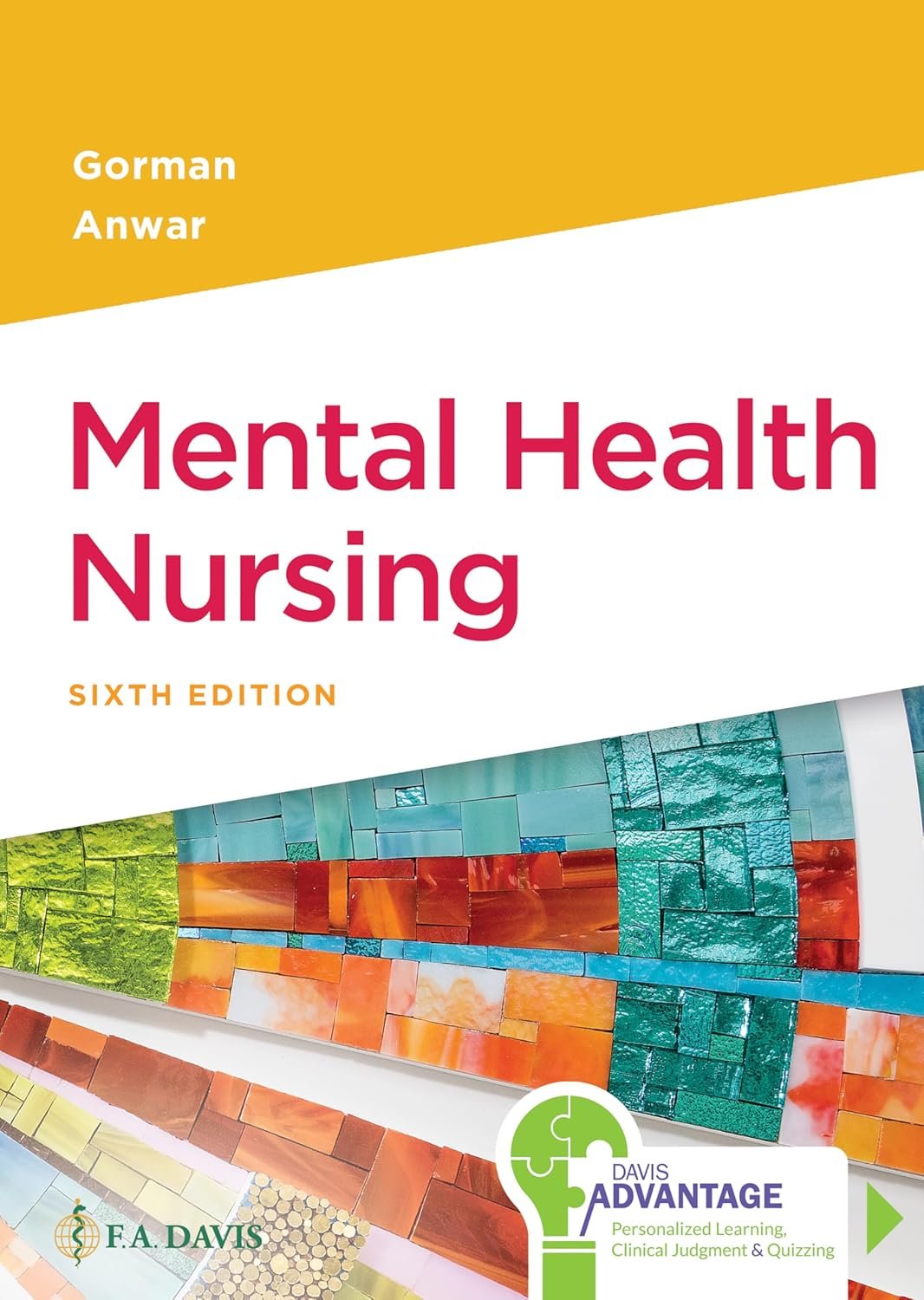
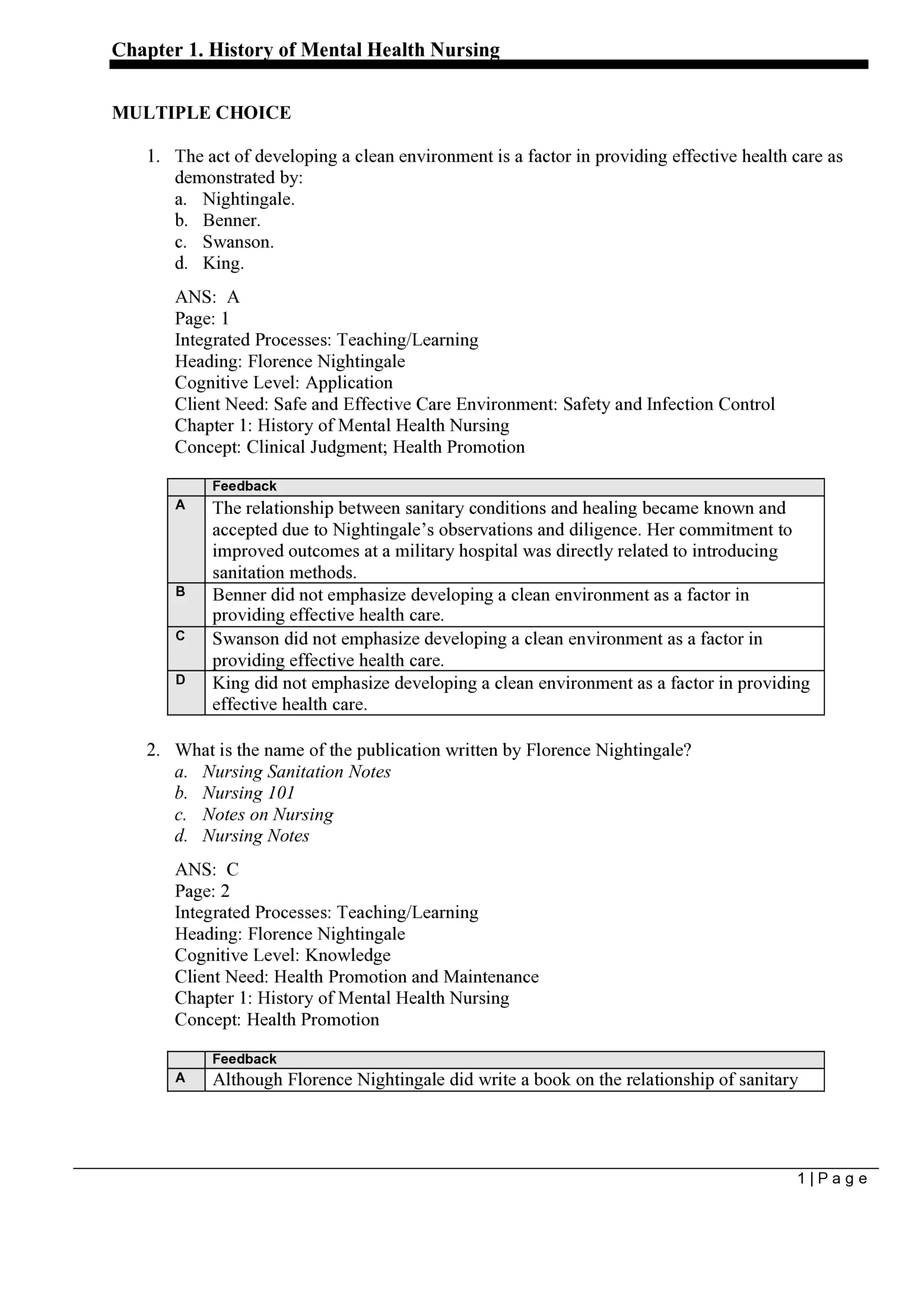
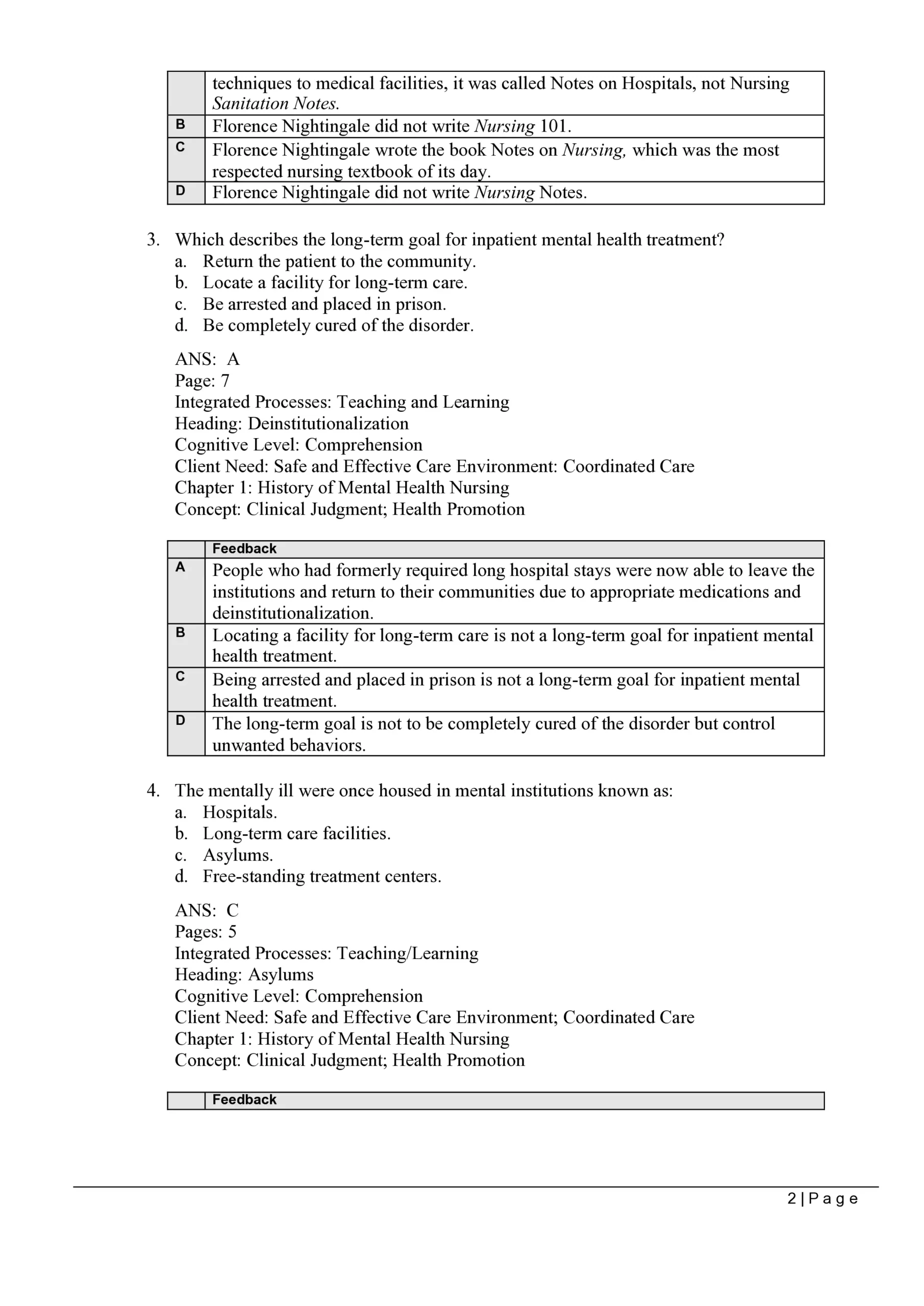
Test Bank for Mental Health Nursing, 6th Edition (Gorman & Anwar)
$26.00 Original price was: $26.00.$23.00Current price is: $23.00.
Test bank for Mental Health Nursing 6th Edition with NCLEX-style questions on anxiety, mood, psychotic, neurocognitive, and substance use disorders to strengthen clinical judgment.

Description
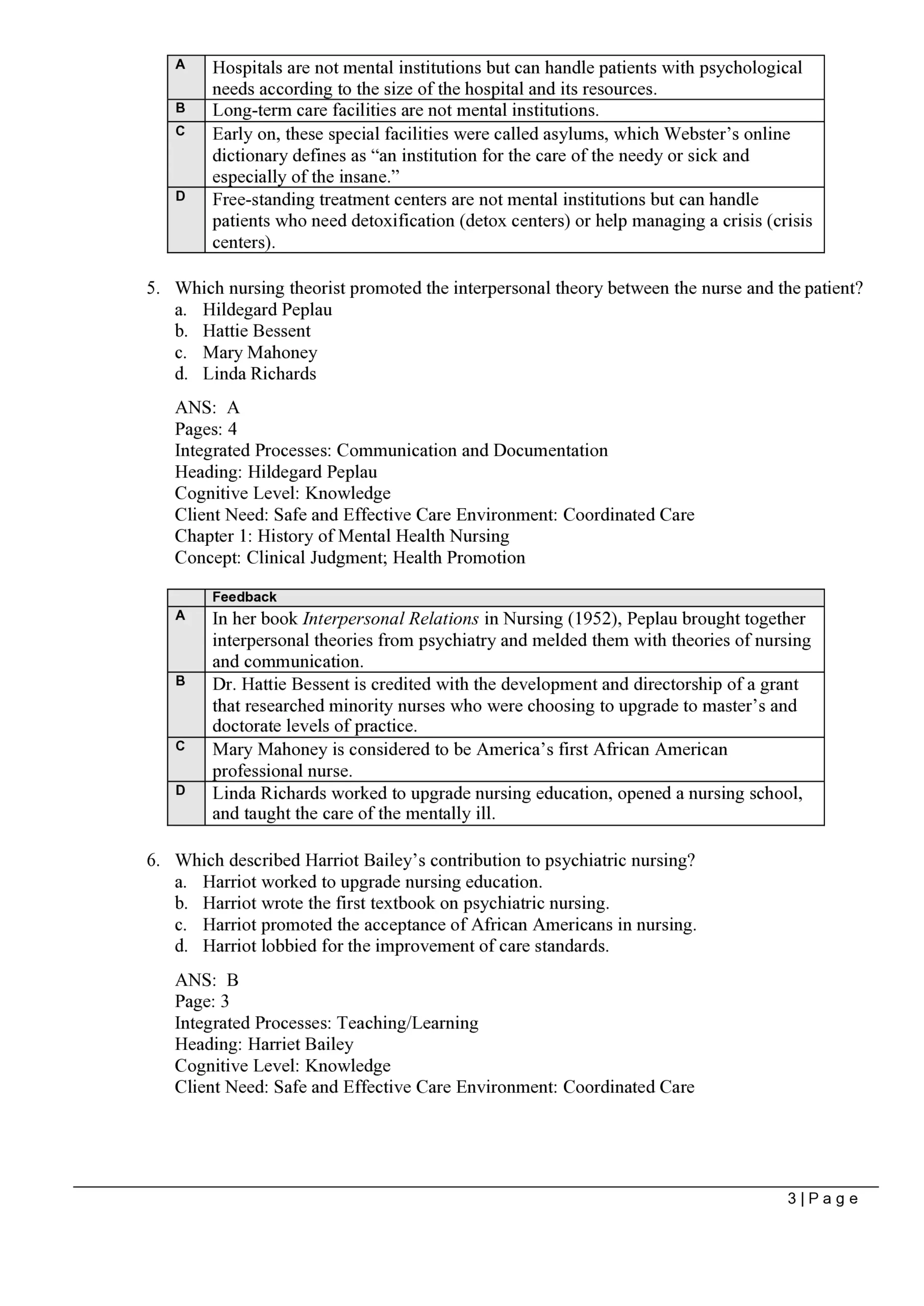
The Mental Health Nursing 6th Edition Test Bank provides a comprehensive set of exam-style questions that reinforce key concepts in psychiatric and mental health nursing. Designed to align with the Mental Health Nursing 6th Edition textbook, this mental health nursing 6th edition test bank helps practical, vocational, and registered nursing students build confidence in assessing, planning, and delivering safe, evidence-based care for clients with mental health needs.
What Mental Health Nursing 6th Edition Test Bank Covers
Organized chapter-by-chapter, this test bank supports your learning across the full mental health nursing curriculum. You’ll find question sets on communication, ethics, sociocultural influences, therapeutic use of self, the nursing process in mental health, and major disorders including anxiety, depressive and bipolar disorders, psychotic disorders, neurocognitive disorders, substance use, and eating disorders.
- Complete chapter coverage from history of mental health nursing to abuse and violence
- NCLEX-style multiple-choice questions that mirror real exam formats
- Focus on clinical judgment, stress and coping, and safety in care
- Scenarios on anxiety, panic attacks, PTSD, and somatic symptom disorders
- Emphasis on therapeutic communication and de-escalation skills
- Questions addressing lifespan issues, from childhood and adolescence to the aging population
- Clear answer key included to support self-assessment and remediation
Why This Test Bank Helps
This test bank is ideal for mental health nursing courses and high-stakes exam preparation. By working through questions on topics like anxiety and panic, psychopharmacology, suicide risk, and coping mechanisms, you’ll strengthen your ability to recognize clinical signs, prioritize nursing interventions, and respond safely to patients in crisis. Regular practice with these items supports better critical thinking and improves exam readiness for mental health content on the NCLEX and course tests.
Key Features
- Evidence-based content: questions built around current mental health nursing standards and frameworks.
- Psychosocial focus: strong emphasis on psychosocial integrity, coping, and therapeutic relationships.
- Application-level questions: many items go beyond recall and require applying knowledge to scenarios.
- User-friendly structure: organized by chapter, making it easy to match with classroom lectures.
- Instant digital access: downloadable format so you can start reviewing immediately.
Table of Contents – Mental Health Nursing, 6th Edition
- History of Mental Health Nursing
- Basics of Communication
- Ethics, Evidence-Based Practice and Regulations
- Developmental Psychology Throughout the Life Span
- Sociocultural Influences on Mental Health
- Nursing Process in Mental Health
- Stress, Coping, and Defense Mechanisms
- Medications and Other Therapies
- Complementary and Alternative Treatment Modalities
- Anxiety, Somatic Symptom Disorders, and Post-Traumatic Stress Disorder
- Depressive Disorders
- Bipolar Disorders
- Suicide
- Personality Disorders
- Schizophrenia Spectrum and Other Psychotic Disorders
- Neurocognitive Disorders: Delirium and Dementia
- Substance Use and Addictive Disorders
- Eating Disorders
- Childhood and Adolescent Mental Health Issues
- Postpartum Issues in Mental Health
- Aging Population
- Abuse and Violence
Sample Questions – Chapter 10: Anxiety, Somatic Symptom Disorders, and Post-Traumatic Stress Disorder
- Question 1. Which of the following is a priority when caring for a highly anxious patient?
- a. Provide support and a therapeutic milieu.
- b. Implement strict limit-setting to control behavior.
- c. Increase environmental stimuli to distract the patient.
- d. Provide more freedom to promote self-expression.
Correct Answer: a. Provide support and a therapeutic milieu.
Rationale: Patients with anxiety disorders need a calm, safe environment and supportive presence. Strict limit-setting, more freedom, or increased stimuli can further increase anxiety rather than reduce it.
- Question 2. Which intervention will the nurse implement for a patient experiencing a panic attack?
- a. Ask the patient to describe their feelings.
- b. Stay with the patient in the exam room.
- c. Set the patient up in a quiet exam room away from activity.
- d. Encourage the patient to remember why their panic attack started.
Correct Answer: b. Stay with the patient in the exam room.
Rationale: Remaining with the patient maintains safety and reduces feelings of abandonment. Probing feelings or causes during the peak of a panic attack can worsen anxiety, and leaving the patient alone is contraindicated.
- Question 3. Which clinical finding will the nurse anticipate for a patient experiencing a panic attack?
- a. Pallor
- b. Bradycardia
- c. Chest pain
- d. Cool dry skin
Correct Answer: c. Chest pain.
Rationale: Chest pain and autonomic arousal (e.g., tachycardia, sweating) are common in panic attacks. Pallor, bradycardia, and cool dry skin are not typical findings.
related test banks Mental Health Nursing
- Davis Advantage for Psychiatric Mental Health Nursing, 10th Edition – Test Bank
- Varcarolis Psychiatric Mental Health Nursing, 9th Edition – Test Bank
- Townsend Psychiatric Mental Health Nursing, 11th Edition – Test Bank
- Townsend Essentials of Psychiatric Mental Health Nursing, 9th Edition – Test Bank
- Neeb’s Mental Health Nursing, 5th Edition – Test Bank
- Foundations of Mental Health Care, 8th Edition – Test Bank
FAQ
Q1: Is this test bank suitable for NCLEX-RN and NCLEX-PN preparation?
Yes. The questions focus on psychosocial integrity, safety, and clinical judgment in mental health care, which are central domains on both NCLEX-RN and NCLEX-PN.
Q2: How will I receive the Mental Health Nursing 6th Edition Test Bank after purchase?
After completing your order, you will receive instant digital access to the test bank file so you can download it and begin practicing right away.
Boost Your Mental Health Nursing Confidence
Reinforce classroom learning, sharpen your critical-thinking skills, and prepare for exams with this focused mental health nursing test bank. Add it to your study toolkit today and start practicing with high-quality questions that reflect real clinical situations.
Related products
-
Sale!

Test Bank for Davis Advantage for Maternal-Child Nursing Care, 3rd Edition
0 - 0 reviews$26.00Original price was: $26.00.$23.00Current price is: $23.00. Add to cart -
Sale!

Test Bank for Davis Advantage for Pediatric Nursing: Critical Components of Nursing Care, 3rd Edition
0 - 0 reviews$26.00Original price was: $26.00.$23.00Current price is: $23.00. Add to cart -
Sale!
Test Bank for Keltner’s Psychiatric Nursing, 9th Edition by Steele
0 - 0 reviews$26.00Original price was: $26.00.$20.00Current price is: $20.00. Add to cart -
Sale!
Test Bank for Lewis’s Medical-Surgical Nursing: Assessment and Management of Clinical Problems, 12th Edition
0 - 0 reviews$23.00Original price was: $23.00.$18.00Current price is: $18.00. Add to cart