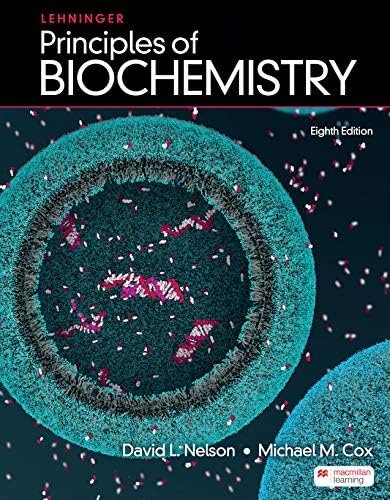

Test Bank for Lehninger Principles of Biochemistry, 8th Edition
$18.00
The Lehninger Principles of Biochemistry, 8th Edition Test Bank by David L. Nelson provides exam-style biochemistry questions with full rationales. Delivered as an instant PDF download, this resource is ideal for nursing, medical, and health science students preparing for NCLEX®, HESI®, and biochemistry exams.

Description
The Lehninger Principles of Biochemistry 8th Edition Test Bank provides comprehensive, exam-style practice designed to help students master complex biochemical processes with confidence. This test bank aligns with all major chapters of the textbook and includes carefully structured questions that mirror real assessment formats. Ideal for undergraduate and graduate biochemistry, nursing, and health-science programs, this resource supports higher-level thinking and improves performance in course exams.
Why This Lehninger Principles of Biochemistry 8th Edition Test Bank Helps
This test bank follows the exact structure of Lehninger’s renowned text, covering metabolic pathways, enzymology, biochemical signaling, genetics, cellular energetics, and more. Questions reflect the depth typically assessed in biochemistry and MCAT/medical-science programs, helping students strengthen critical-thinking skills and apply biochemical concepts effectively.
What’s Included
- Complete chapter coverage from foundations of biochemistry to gene expression
- Multiple-choice questions modeled after real course and program exams
- Detailed rationales to support understanding and retention
- Includes glycolysis, gluconeogenesis, amino acid metabolism, DNA/RNA metabolism, oxidative phosphorylation, and more
- Supports exam prep for nursing, pre-med, biology, and biochemistry majors
- Digital download—accessible immediately
- Improves analytical thinking for biochemistry-based assessments
TABLE OF CONTENTS
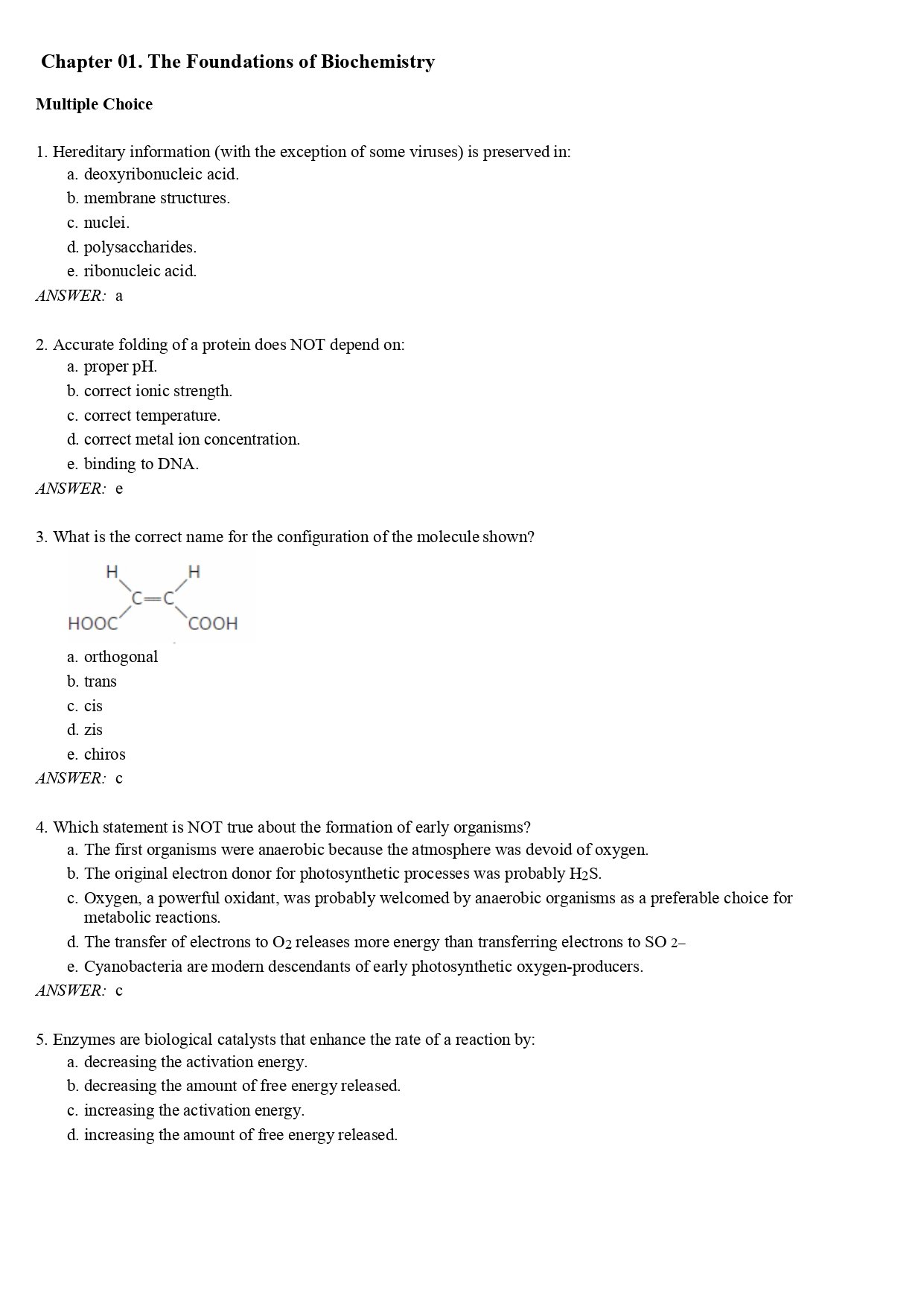
- Chapter 01: The Foundations of Biochemistry
- Chapter 02: Water, the Solvent of Life
- Chapter 03: Amino Acids, Peptides, and Proteins
- Chapter 04: The Three-Dimensional Structure of Proteins
- Chapter 05: Protein Function
- Chapter 06: Enzymes
- Chapter 07: Carbohydrates and Glycobiology
- Chapter 08: Nucleotides and Nucleic Acids
- Chapter 09: DNA-Based Information Technologies
- Chapter 10: Lipids
- Chapter 11: Biological Membranes and Transport
- Chapter 12: Biochemical Signaling
- Chapter 13: Introduction to Metabolism
- Chapter 14: Glycolysis, Gluconeogenesis, and the Pentose Phosphate Pathway
- Chapter 15: The Metabolism of Glycogen in Animals
- Chapter 16: The Citric Acid Cycle
- Chapter 17: Fatty Acid Catabolism
- Chapter 18: Amino Acid Oxidation and the Production of Urea
- Chapter 19: Oxidative Phosphorylation
- Chapter 20: Photosynthesis and Carbohydrate Synthesis in Plants
- Chapter 21: Lipid Biosynthesis
- Chapter 22: Biosynthesis of Amino Acids, Nucleotides, and Related Molecules
- Chapter 23: Hormonal Regulation and Integration of Mammalian Metabolism
- Chapter 24: Genes and Chromosomes
- Chapter 25: DNA Metabolism
- Chapter 26: RNA Metabolism
- Chapter 27: Protein Metabolism
- Chapter 28: Regulation of Gene Expression
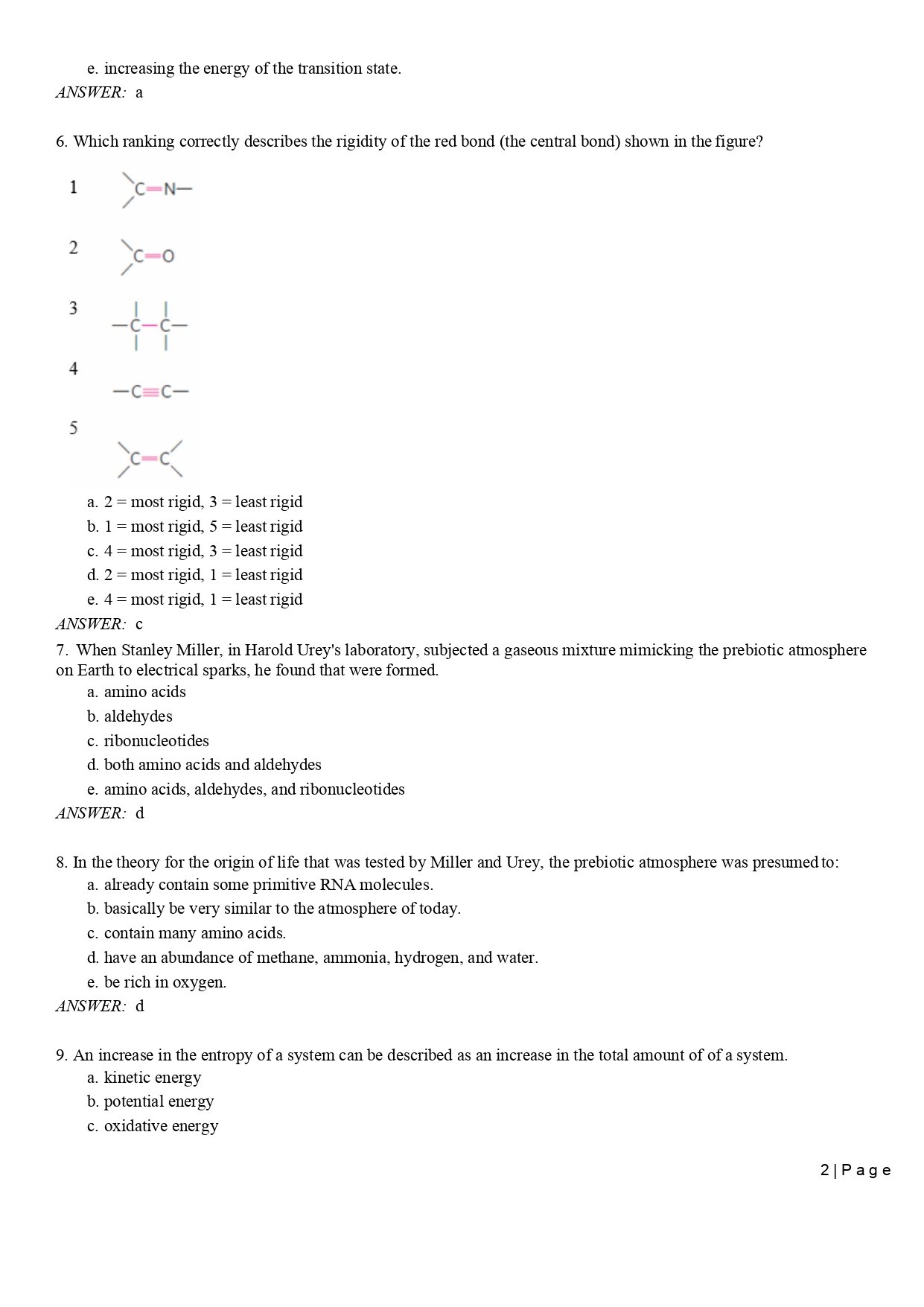
Sample Questions
Chapter 14: Glycolysis, Gluconeogenesis, and the Pentose Phosphate Pathway
- In humans, gluconeogenesis:
- a. can result in the conversion of protein into blood glucose.
- b. helps to reduce blood glucose after a carbohydrate-rich meal.
- c. is activated by the hormone insulin.
- d. is essential in the conversion of fatty acids to glucose.
- e. requires the enzyme hexokinase.
Answer: a
- When a mixture of glucose 6-phosphate and fructose 6-phosphate is incubated with the enzyme phosphohexose
isomerase, the final mixture contains twice as much glucose 6-phosphate as fructose 6-phosphate. Which statement is
MOST nearly correct?- a. ΔG′° is +1.7 kJ/mol.
- b. ΔG′° is –1.7 kJ/mol.
- c. ΔG′° is incalculably large and negative.
- d. ΔG′° is incalculably large and positive.
- e. ΔG′° is zero.
Answer: a
- There is reciprocal regulation of glycolytic and gluconeogenic reactions interconverting fructose-6-phosphate and
fructose-1,6-bisphosphate. Which statement about this regulation is NOT correct?- a. Fructose-2,6-bisphosphate activates phosphofructokinase-1.
- b. Fructose-2,6-bisphosphate inhibits fructose-1,6-bisphosphatase.
- c. The fructose-1,6-bisphosphatase reaction is exergonic.
- d. The phosphofructokinase-1 reaction is endergonic.
- e. This regulation allows control of the direction of net metabolite flow.
Answer: d
- Which statement regarding glycolysis is true?
- a. Both substrate-level phosphorylation reactions in glycolysis are irreversible.
- b. The oxidation reaction in glycolysis produces two high-energy molecules.
- c. There are four isomerization reactions in glycolysis.
- d. One inorganic phosphate is consumed as a substrate for each glucose molecule.
- e. All statements are true.
Answer: b
Related Test Banks
- Lehninger Principles of Biochemistry 8th Edition — lehninger-principles-of-biochemistry-8th-edition-test-bank
- The Cell: A Molecular Approach 9th Edition Test Bank — test-bank-for-the-cell-a-molecular-approach-9th-edition
- Fundamentals of Biochemistry 6th Edition Test Bank — test-bank-for-fundamentals-of-biochemistry-6th-edition
- Williams Basic Nutrition & Diet Therapy 16th Edition Test Bank — williams-basic-nutrition-and-diet-therapy-16th-edition-test-bank
- Principles of Anatomy & Physiology 16th Edition Test Bank — principles-of-anatomy-and-physiology-16th-edition-test-bank
Frequently Asked Questions
Q: Does this test bank follow the 8th edition exactly?
Yes. All chapters correspond directly to the 8th edition of Lehninger Principles of Biochemistry.
Q: Are these questions suitable for college-level exams?
Yes. The questions are designed for undergraduate and graduate-level biochemistry courses, featuring the depth and rigor expected in higher education.
Take Your Biochemistry Knowledge to the Next Level
Master core biochemical pathways and mechanisms with structured, exam-focused practice. Download now and start preparing smarter.
Get instant access today and strengthen your exam performance.
Related products
-

Principles of Anatomy and Physiology 16th Edition Test Bank
$18.00 Add to cart -

Test Bank for Anatomy and Physiology, 11th Edition by Kevin T. Patton
$18.00 Add to cart -
Test Bank for Foundations of Maternal-Newborn and Women’s Health Nursing, 8th Edition
$18.00 Add to cart -
Test Bank for Davis Advantage for Basic Nursing: Thinking, Doing, and Caring, 3rd Edition by Leslie S. Treas, Karen L. Barnett & Mable H. Smith
$18.00 Add to cart